
Different Types of Abdominoplasty Surgery for Your Unique Body Concern Post Weight Loss

28/01/2025

Different Types of Abdominoplasty Surgery for Your Unique Body Concern Post Weight Loss

Different Types of Abdominoplasty Surgery for Your Unique Body Concern Post Weight Loss Abdominoplasty is a surgical procedure designed to target multiple concerns resulting from significant weight loss after bariatric surgery or pregnancy.  Because each patient is unique, abdominoplasty can be tailored to suit the concerns, needs, and goals, as well as the medical history of each patient. Examples If, for example, a post-pregnancy patient presents with muscle separation (diastasis recti) and excess fat but minimal loose skin laterally, a full abdominoplasty with diastasis recti repair and VASER Liposuction would be the likely course of treatment. On the other hand,

Read more

20/10/2024

How Significant Changes in the Body’s Morphology (Biology) Affects Fleur-de-Lis Abdominoplasty Surgery

How Significant Changes in the Body’s Morphology (Biology) Affects Fleur-de-Lis Abdominoplasty Surgery Significant morphological changes resulting from massive weight loss impact Fleur-de-Lis abdominoplasty surgery, affecting the approach, customisation, execution, and outcomes. Massive weight loss could cause extreme changes in body morphology (biology), many times necessitating surgical intervention to reinstate the body’s aesthetic and functional features. One such surgical procedure is Fleur-de-Lis abdominoplasty, which can be very effective in cases of extensive skin laxity and irregular contouring. Despite the specialisation in significant skin laxity in the lower and upper abdomen, significant morphological changes can have profound impact on the planning, execution, and

Read more

18/10/2024

Customised Approaches for Lower Body Readjustment: Abdominoplasty, Belt Lipectomy, Fleur-de-Lis Abdominoplasty, and Combined Procedures

Customised Approaches for Lower Body Readjustment: Abdominoplasty , Belt Lipectomy, Fleur-de-Lis Abdominoplasty, and Combined Procedures Patients looking for lower body readjustment can consider traditional abdominoplasty (tummy tuck), belt lipectomy, Fleur-de-Lis abdominoplasty, or a combination of procedures. Massive weight loss leads to loose skin in the lower body, especially the abdomen, flanks, hips, and buttocks. The loose skin affects the patient’s aesthetics and can cause functionality difficulties, which calls for removal. Face blurred for privacy Disclaimer: Operation performed by Dr Bernard Beldholm. Adult content, surgery has risks; individual results vary, seek 2nd opinion. Please see the full disclaimer. The primary surgical procedures

Read more

16/10/2024

Regaining Weight After Fleur-de-Lis Abdominoplasty 

Regaining Weight After Fleur-de-Lis Abdominoplasty Gaining weight after Fleur-de-lis abdominoplasty can impact the procedure’s results. Therefore, it’s recommended to maintain a stable weight after weight loss surgery. A Fleur-de-lis abdominoplasty is a surgical procedure that removes excess, loose skin from the lower and upper abdomen. It also involves repairing any weakened or separated abdominal muscles. The results of this procedure are long-lasting, but gaining weight after the surgery can impact the results. Significant weight gain can cause the abdominal skin and muscles to stretch again. If there is a significant fluctuation in weight, it can have serious consequences and may

Read more

12/10/2024

Recovery Timeline: What to Expect One Day, One Week, One Month, Post Fleur-de-lis Abdominoplasty

Recovery Timeline: What to Expect One Day, One Week, One Month, Post Fleur-de-lis Abdominoplasty Recovery is an integral step following Fleur-de-lis abdominoplasty. Though the recovery time frame differs in each patient, most patients can resume light activities 3-4 weeks after surgery. Fleur-de-lis Abdominoplasty targets excess skin and separated abdominal muscles in the lower and upper abdominal region. In order to achieve this, however, it is important to follow your surgeon’s instructions carefully. To that end, understanding the recovery process and what to expect after surgery is crucial. This article provides a detailed recovery timeline following Fleur-de-lis surgery. The First 24

Read more
Obtaining Medicare Coverage for Fleur-de-Lis Abdominoplasty Surgery

28/09/2024

Obtaining Medicare Coverage for Fleur-de-Lis Abdominoplasty Surgery

Obtaining Medicare Coverage for Fleur-de-Lis Abdominoplasty Surgery Medicare will only cover Fleur-de-Lis abdominoplasty if it is a medical necessity. There are two groups qualifying for MBS number: post-pregnancy cases involving muscle separation (Diastasis recti) and related symptoms and post-weight loss cases where the patient records a weight loss exceeding 5 BMI levels and maintains stable weight for at least 6 months. Funding fleur de lis surgery can be costly and challenging. Therefore, most patients in Australia consider Medicare rebates to help cover the procedure’s cost. This is a viable option; however, Medicare has set strict criteria that patients must meet

Read more

27/09/2024

Umbilical Hernia Repair during Fleur-de-Lis Abdominoplasty Surgery

Umbilical Hernia Repair during Fleur-de-Lis Abdominoplasty Surgery Though umbilical hernias, which are highly prevalent in babies, are painless and commonly go away on their own, sometimes, when adults experience them, they may be tender to the touch, cause discomfort, and can be aesthetically unappealing.   A common indication of an umbilical hernia is a bulge around the navel. Most patients report seeing a protrusion when they sneeze or lift something heavy. Fleur-de-Lis Abdominoplasty offers adults with an umbilical hernia more than just aesthetic benefits, it presents a unique opportunity for simultaneous umbilical hernia repair and removal of fatty tissue and skin

Read more

25/09/2024

Self-Testing to Determine Whether You’re a Candidate for Fleur-de-Lis Abdominoplasty 

Self-Testing to Determine Whether You’re a Candidate for Fleur-de-Lis Abdominoplasty  Self-assessment measures, such as evaluating physical condition, defining Fleur-de-lis (FDL) goals, assessing skin laxity extent, and determining discomfort or dysfunction can help a patient determine if they are the ideal FDL candidates. More extensive and complex than standard abdominoplasty, Fleur-de-lis (FDL) abdominoplasty is the ideal option for anyone with skin laxity on the abdominal area that cannot be effectively treated with a traditional tummy tuck (Abdominoplasty) procedure. However, it can be challenging for patients to determine whether they are ideal candidates for an FDL procedure on their own, which is

Read more
Risk of Outer Scar Following Fleur-de-Lis Surgery (Tummy Tuck)

22/09/2024

Risk of Outer Scar Following Fleur-de-Lis Surgery Abdominoplasty

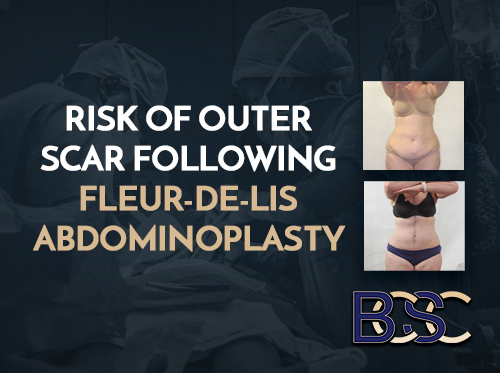
Risk of Outer Scar Following Fleur-de-Lis Surgery Abdominoplasty Most individuals undergo Fleur-de-Lis abdominoplasty to target their abdominal contour. However, one should not overlook the risks associated with the procedure and all other surgical procedures. One such risk is scarring after Fleur-de-Lis abdominoplasty. It’s important to note that you cannot avoid scars in totality after a surgical procedure. There are ways, however, to make them less conspicuous and reduce the risk of abnormal scarring. The patient also has a role to play. Therefore, learning about scarring following Fleur-de-Lis Abdominoplasty, how to reduce the risk, and what treatment options are available are

Read more
Treating Loose Skin Following Bariatric Surgery on the Abdomen and Back

25/04/2024

Treating Loose Skin Following Bariatric Surgery on the Abdomen and Back

Treating Loose Skin Following Bariatric Surgery on the Abdomen and Back Treating loose skin on the abdomen and back following bariatric surgery involves non-invasive approaches like maintaining a balanced diet, exercising, and topical treatments; or surgical procedures like an abdominoplasty. Abdominal and back skin can lead to health and psychological complications. Therefore, most post-bariatric patients will seek ways to get rid of the excessive loose skin on their back and abdomen. Treating  loose skin resulting from bariatric surgery involves non-surgical or surgical approaches. Tattoo (on right arm) blurred for privacy Disclaimer: Operation performed by Dr Bernard Beldholm. Adult content, surgery

Read more