Circumferential Hybrid Abdominoplasty Complications (Combined Vertical with Circumferential Abdominoplasty)
Circumferential hybrid abdominoplasty is one of the most extensive forms of body lift (belt lipectomy) surgery performed within post-weight-loss body contouring. It combines a fleur de lis abdominoplasty with a circumferential abdominoplasty (belt lipectomy) to treat both vertical and horizontal excess skin around the abdomen, flanks, lower back, and entire waistline.
At Body Contouring Surgery Clinic (BCSC), this procedure is typically considered for patients who have undergone significant weight loss, including those following bariatric surgery, long-term medical weight loss programs, or lifestyle-driven weight loss. These patients often present with marked excess skin and fat, loose skin, and reduced skin elasticity that cannot be adequately treated with a standard tummy tuck (abdominoplasty) alone.

Circumferential hybrid abdominoplasty | Body Contouring Surgery Clinic

This article provides a comprehensive, educational overview of the potential complications associated with circumferential hybrid abdominoplasty. The intention is to support informed decision-making by clearly outlining known risks, recovery considerations, and factors that influence outcomes. While many patients progress through surgery and healing without major issues, it is important to understand that this is a large surgical procedure with a generally high physiological demand and a recognised complication rate that exceeds that of more limited abdominal operations.
Understanding the Circumferential Hybrid Abdominoplasty Approach
A circumferential hybrid abdominoplasty integrates two established abdominal contouring techniques into a single operation:
Fleur de lis abdominoplasty, which removes excess vertical and horizontal abdominal skin through a combination of a midline vertical incision and a lower horizontal incision across the lower abdomen.

Fleur de lis abdominoplasty | Body Contouring Surgery Clinic
Circumferential abdominoplasty (belt lipectomy), which extends the incision around the entire waist to treat the lower back, flanks, and buttock region, functioning as a comprehensive lower body lift (belt lipectomy).

Circumferential abdominoplasty | Body Contouring Surgery Clinic
This combined approach allows surgeons to treat severe excess skin, redundant skin, and excess tissue that commonly occur after massive weight loss or when patients have experienced significant weight loss over time. By treating the front and back of the lower torso together, the procedure aims to treat overall body contour balance rather than focusing solely on the anterior abdomen.
However, the extent of dissection, the length of incisions, and the degree of tissue manipulation required mean that the risk profile differs substantially from that of a traditional abdominoplasty.
Why Complications Are More Common in Hybrid Body Lift (belt lipectomy) Surgery
The complication rate following circumferential hybrid abdominoplasty is influenced by multiple interacting factors. Compared with a standard tummy tuck (abdominoplasty), this operation typically involves:
- Longer operative times under general anaesthesia
- Extensive undermining of the abdominal skin and soft tissues
- A long horizontal incision around the entire waist combined with a vertical incision on the abdomen
- Reduced blood supply to elevated skin flaps
- Removal of large volumes of excess skin and fat
Patients who have undergone massive weight loss may also have altered physiology, including reduced skin quality, nutritional deficiencies, or underlying medical conditions that increase the likelihood of wound healing complications. For these reasons, circumferential hybrid abdominoplasty is considered a higher-risk body lift procedure, and careful patient selection is essential.
Wound Healing Complications
Delayed Healing and Wound Breakdown
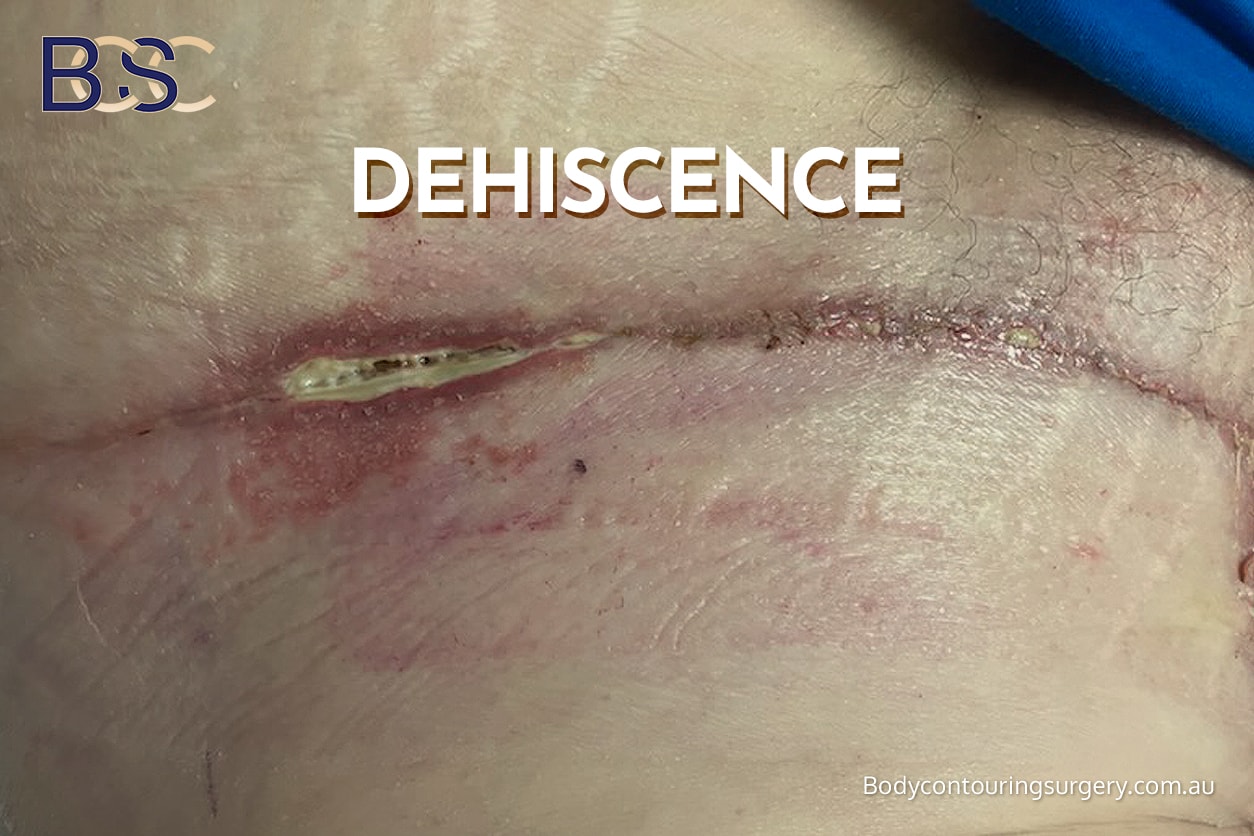
Dehiscence | Body Contouring Surgery Clinic
Problems related to wound healing represent one of the most frequent complications following circumferential hybrid abdominoplasty. The combination of long incisions, tension across closure lines, and reduced tissue perfusion can lead to:
- Delayed wound healing
- Small areas of superficial wound separation
- Wound dehiscence, particularly at points of maximal tension
The intersection between the vertical and horizontal incisions in a fleur de lis abdominoplasty is especially vulnerable. Factors such as smoking, diabetes, poor nutritional status, and ongoing weight loss during recovery further increase the risk of wound healing problems.
Most wound issues are minor and managed with local wound care, but some may prolong the recovery process or require additional procedures.
Fluid Collections (Seroma)
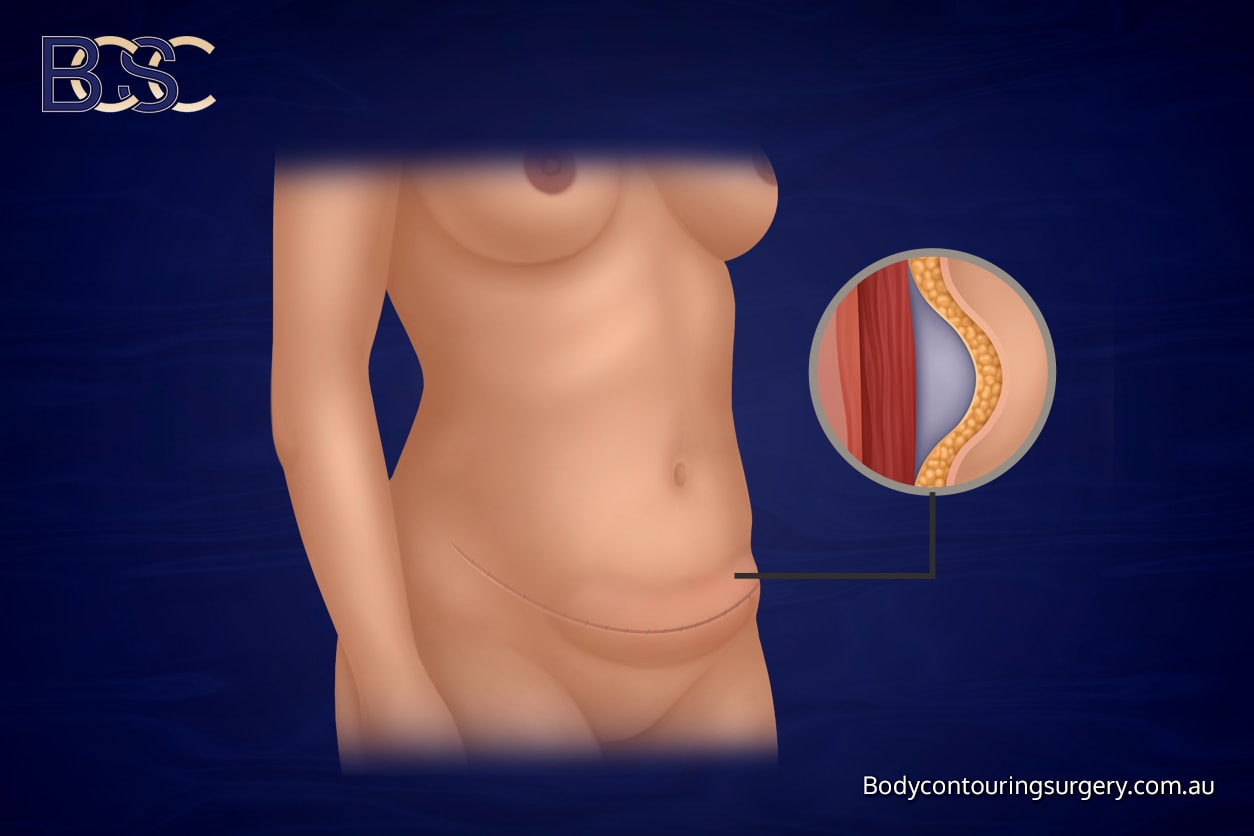
Seroma post abdominoplasty | Body Contouring Surgery Clinic
Seroma formation is a common issue after large-volume body contour surgery. A seroma is a collection of clear fluid that accumulates in the space created when excess tissue and excess fat are removed.
Patients may notice:
- Swelling in the abdominal area or lower back
- A sensation of fluid movement
- Localised discomfort or asymmetry
Management may include needle aspiration, extended use of compression garments, or observation over several weeks. While seromas often resolve, persistent collections can increase the risk of infection or delay healing.
Infection Risk

Bacteria | Body Contouring Surgery Clinic
Wound infection is a recognised complication of major body lift (belt lipectomy) surgery. The size of the surgical field and the length of incisions increase exposure risk, even when surgery and postoperative care are meticulously managed.
Signs of infection may include:
- Increasing redness or warmth around the incision
- Pain that worsens rather than improves
- Discharge from the wound
- Fever or systemic symptoms
Risk factors include diabetes, immune compromise, prolonged surgery, and challenges with wound care during the early recovery period. Early diagnosis and treatment are critical to limit progression and reduce the risk of wound healing problems.
Bleeding and Haematoma Formation
Bleeding beneath the skin may result in a haematoma, which is a collection of blood that causes swelling, pressure, and pain. Small haematomas may resolve without intervention, while larger collections can compromise wound healing and may require surgical drainage.
The risk of bleeding is influenced by the extent of dissection, blood pressure control, and individual patient factors.
Blood Clots and Circulatory Complications
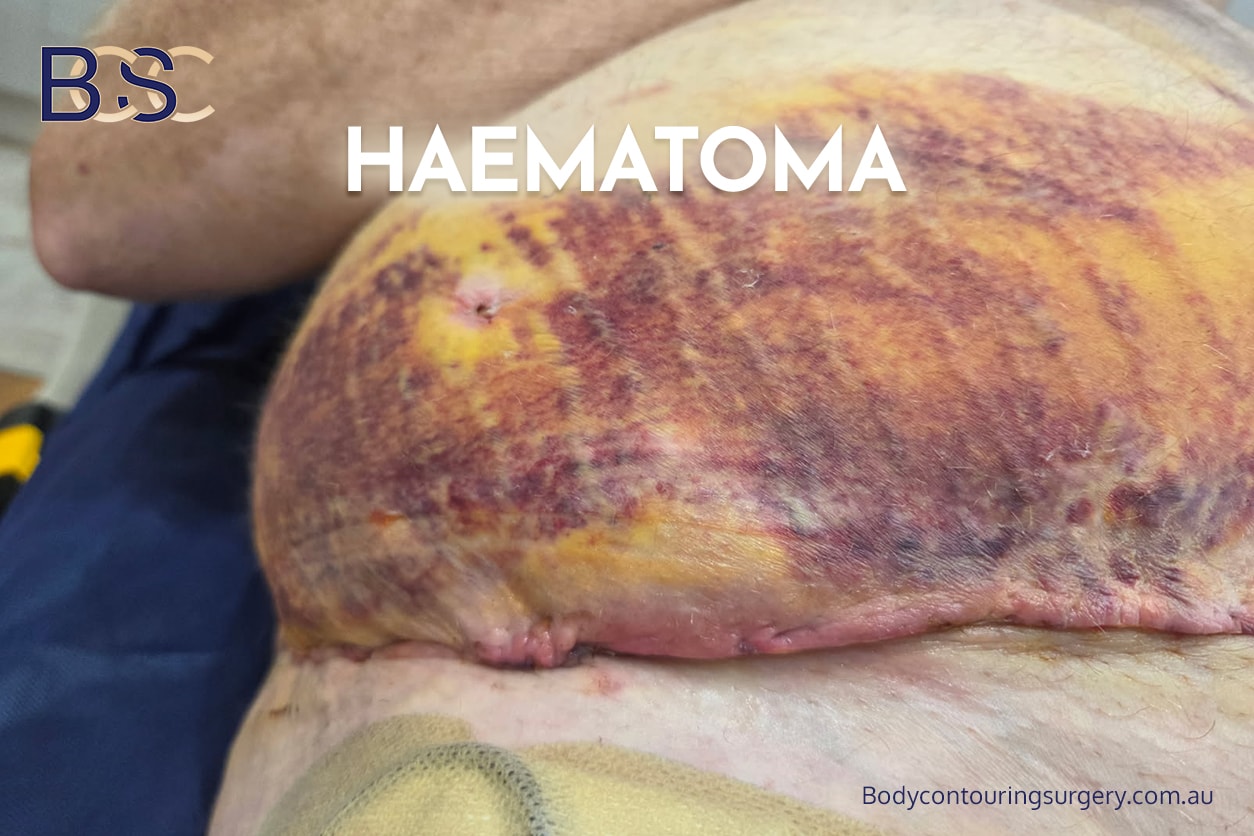
Abdominal Haematoma | Body Contouring Surgery Clinic
Blood clots, including deep vein thrombosis and pulmonary embolism, are serious but uncommon surgical risks associated with extensive lower body surgery.
Contributing factors include:
- Long operative time
- Reduced mobility during the first few weeks after surgery
- Higher body mass index
- A history of undergone significant weight loss or recent illness
Preventative strategies are routinely used, including early mobilisation and mechanical compression, but risk cannot be completely eliminated.
Sensory Changes and Nerve Injury
Temporary or permanent changes in skin sensation are common after abdominoplasty. The most commonly injured nerve in abdominoplasty is typically a branch of the intercostal nerves supplying the lower abdomen.
Patients may experience:
- Numbness
- Tingling
- Altered sensitivity across the abdominal skin
In many cases, sensation gradually comes back over several months, but some degree of long-term sensory change is possible.
Belly Button (Umbilical) Complications
The belly button is repositioned during circumferential hybrid abdominoplasty to maintain a correct anatomical location after excess abdominal skin is removed.
Potential complications include:
- Delayed umbilical healing
- Partial skin loss due to reduced blood supply
- Infection
- Visible scarring or asymmetry
Umbilical complications are more likely in extensive procedures where blood flow to the surrounding abdominal skin is compromised.
Scarring and Scar-Related Concerns
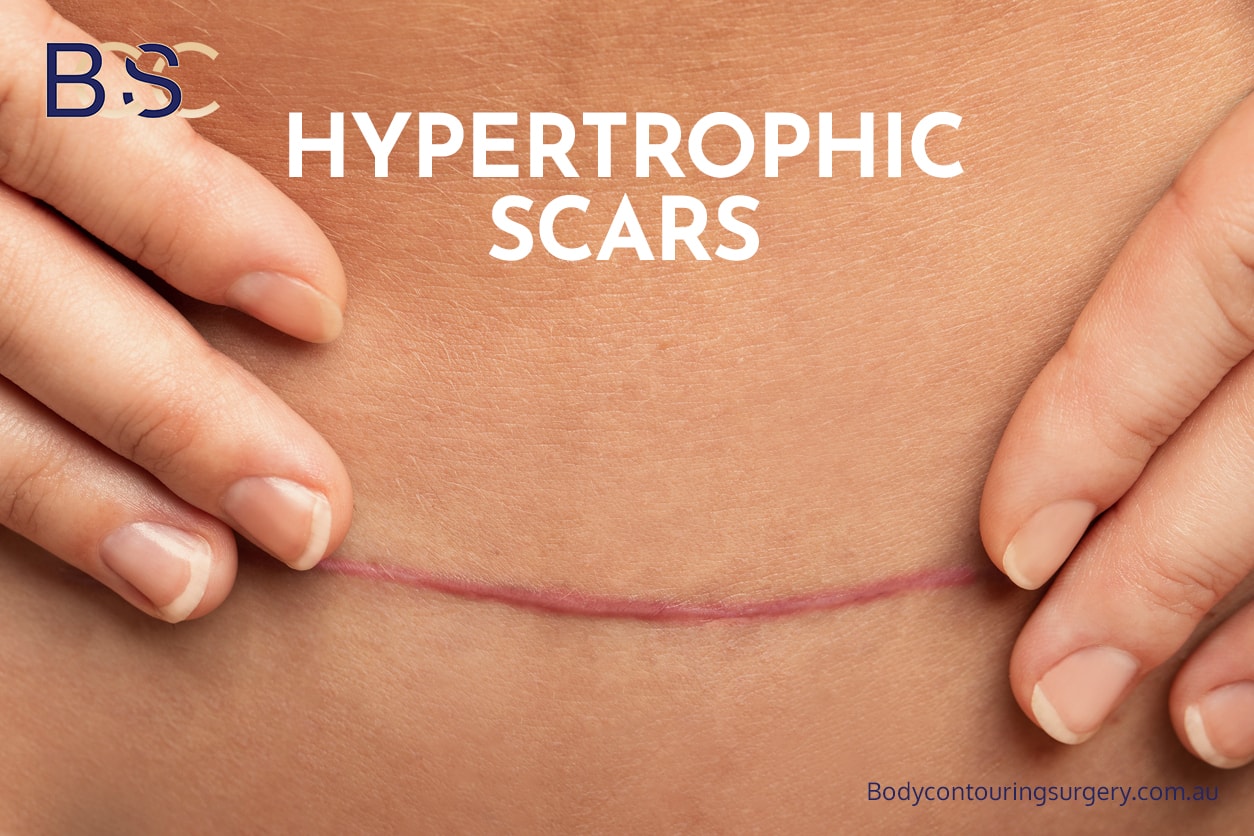
Hypertrophic scars | Body Contouring Surgery Clinic
Scarring is unavoidable after a circumferential hybrid abdominoplasty. Patients should expect:
- A long circumferential scar extending around the entire waistline
- A vertical midline abdominal scar from the fleur de lis abdominoplasty component
While most scars fade over time, some patients develop thickened, widened, or uneven scars. Scar maturation can take 12 to 18 months and varies based on skin type, genetics, wound healing, and postoperative care.
Abdominal Wall and Muscle-Related Issues
Many circumferential hybrid abdominoplasty procedures include tightening of the abdominal muscles to treat muscle separation (Diastasis recti) or abdominal wall laxity.
Potential complications include:
- Failure or stretching of the muscle repair
- Ongoing abdominal wall discomfort
- Functional limitations during the healing process
These issues may affect posture, core strength, and return to physical activity during the recovery period.
The Effect of Weight Changes After Surgery
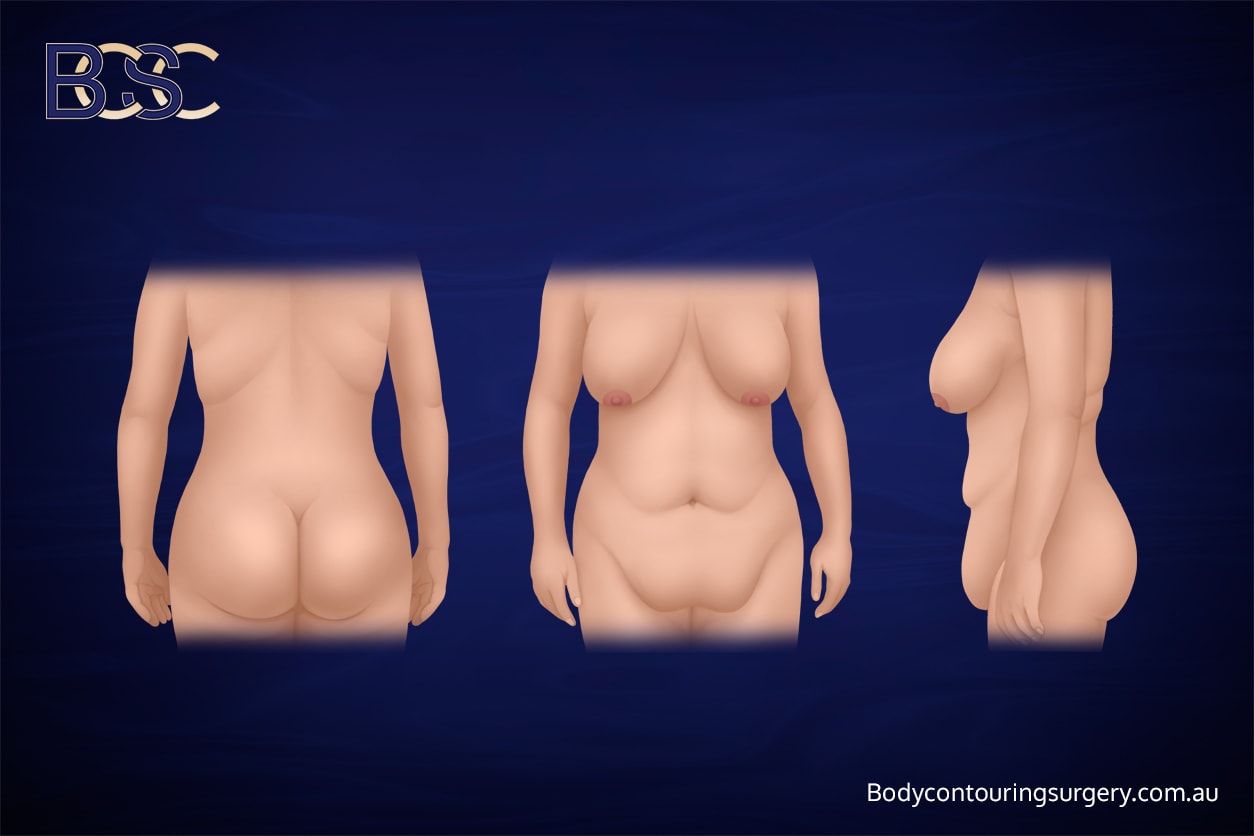
Loose skin after weight loss | Body Contouring Surgery Clinic
Significant weight loss or weight gain after surgery can adversely affect both results and complication risk. Patients are usually advised to reach a stable goal weight and maintain it before undergoing surgery.
Postoperative weight fluctuations may contribute to:
- Recurrent excess skin or loose skin
- Increased tension on scars
- Changes in overall body contour balance
Less Common but Serious Complications
Although uncommon, more serious complications can occur, including:
- Skin necrosis due to compromised blood supply
- Major infections requiring hospital treatment
- Systemic complications related to anaesthesia
Because of these risks, circumferential hybrid abdominoplasty is not everyone, even among patients with severe excess skin following significant weight loss.
Preoperative Assessment and Risk Reduction
A thorough initial consultation and comprehensive evaluation are critical components of risk management. Assessment typically includes:
- Detailed medical history review
- Evaluation of weight stability and nutritional status
- Examination of skin, fat, and abdominal wall integrity
- Discussion of alternative or staged surgical options
In some cases, performing surgery in stages—such as a lower body lift (belt lipectomy) followed later by procedures like thigh lift (thighplasty) surgery, breast reduction (reduction mammoplasty), or surgery of the upper arms (brachioplasty)—may reduce overall complication risk.
Recovery, Monitoring, and Follow-Up

Recovering after surgery | Body Contouring Surgery Clinic
The recovery time for a circumferential tummy tuck (abdominoplasty) is longer than for a standard abdominoplasty. Most patients should expect:
- Several weeks away from work and normal daily activities
- Activity restrictions to protect wound healing
- Prolonged use of compression garments
- Close monitoring during the first few weeks after surgery
Early identification and management of complications play an important role in supporting optimal healing and long-term outcomes.
Frequently Asked Questions
What is the most common complication of abdominoplasty?
The most common complication is related to wound healing, including delayed healing and minor wound breakdown.
What is a hybrid tummy tuck (abdominoplasty)?
A hybrid tummy tuck (abdominoplasty) refers to a combination approach—most commonly fleur de lis abdominoplasty with circumferential abdominoplasty—to manage both vertical and horizontal excess skin.
What is the recovery time for a circumferential tummy tuck (abdominoplasty)?
The recovery period usually extends over several months, with the most demanding phase occurring in the first 6 to 8 weeks.
Final Considerations

Circumferential hybrid abdominoplasty can remove extensive excess skin and fat and treats functional issues related to redundant tissue after significant weight loss. However, it remains a major body lift (belt lipectomy) procedure with an inherently higher complication rate than less extensive abdominal surgery.
At BCSC, the emphasis is on careful patient selection, thorough education, and realistic expectations. A consultation with a qualified Specialist General Surgeon is essential to determine whether this procedure is appropriate for an individual patient and to fully understand the potential risks and recovery requirements.

Location of practice: 30 Belmore Rd, Lorn, NSW 2320
Area of interest:
Body contouring surgery post pregnancy and post-weight loss, including Abdominoplasty, Mastopexy, Breast augmentation (Augmentation mammoplasty), Brachioplasty and Thighplasty.