This comprehensive guide focuses on recovering from upper body lift torsoplasty surgery for men after massive weight loss, discussing the physical, emotional, and practical aspects of the recovery process.
Recovery after male chest surgery following major weight loss is often underestimated. For men who have experienced significant weight loss, excess skin, loose skin, and excess skin folds across the upper body can make recovery more complex than expected. While the surgical planning and technique are important, the recovery phase is where patients truly experience the impact of surgery physically, emotionally, and practically.
This guide is dedicated entirely to recovery after upper body lift (torsoplasty) surgery in men. It is intentionally separate from discussions about indications, classifications, or surgical decision‑making. Instead, it focuses on what patients consistently tell us they want clarity on:
- What recovery actually feels like
- How recovery differs depending on the type of surgery performed
- What is considered normal versus concerning
- How to prepare properly for the weeks ahead
At Body Contouring Surgery Clinic, recovery is treated as an active phase of care rather than an afterthought. As with all surgical procedures, individual experiences and outcomes vary, and recovery should be guided by personalised medical advice. Our follow‑up structure, dressing protocols, and hospital pathways are designed specifically for post‑weight‑loss male patients.
Recovery Is Not One‑Size‑Fits‑All
Men who present after significant weight loss do not recover uniformly. Factors such as skin quality, skin laxity, remaining skin, excess skin and fat, and changes in body mass index all influence the healing process after body lift surgery. Skin quality, lymphatic changes, previous bariatric surgery, and the extent of tissue removal all influence healing.
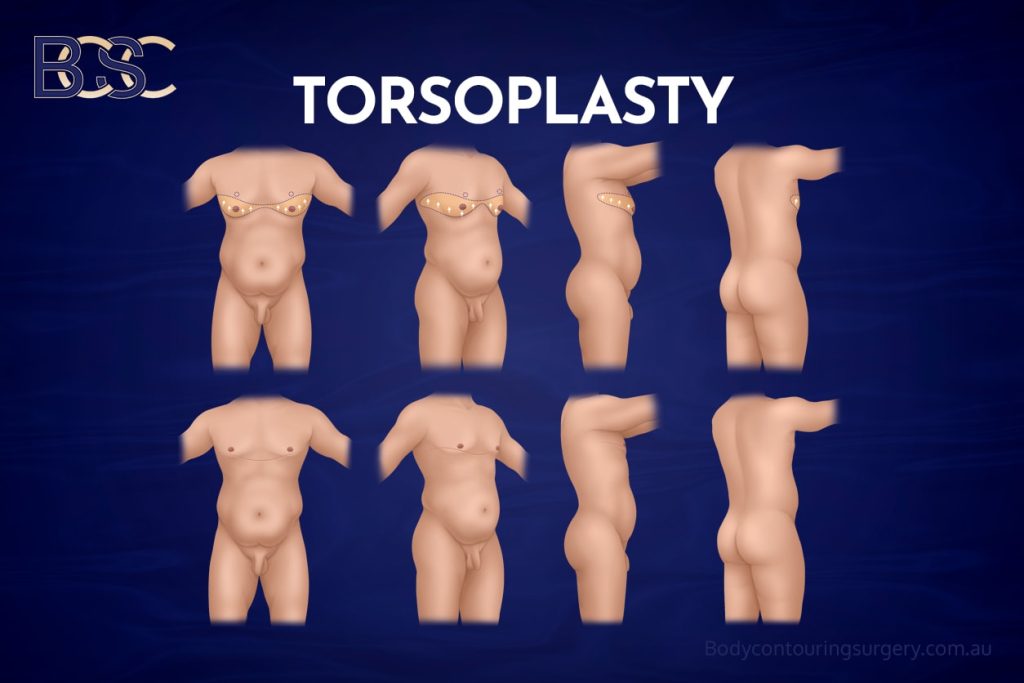
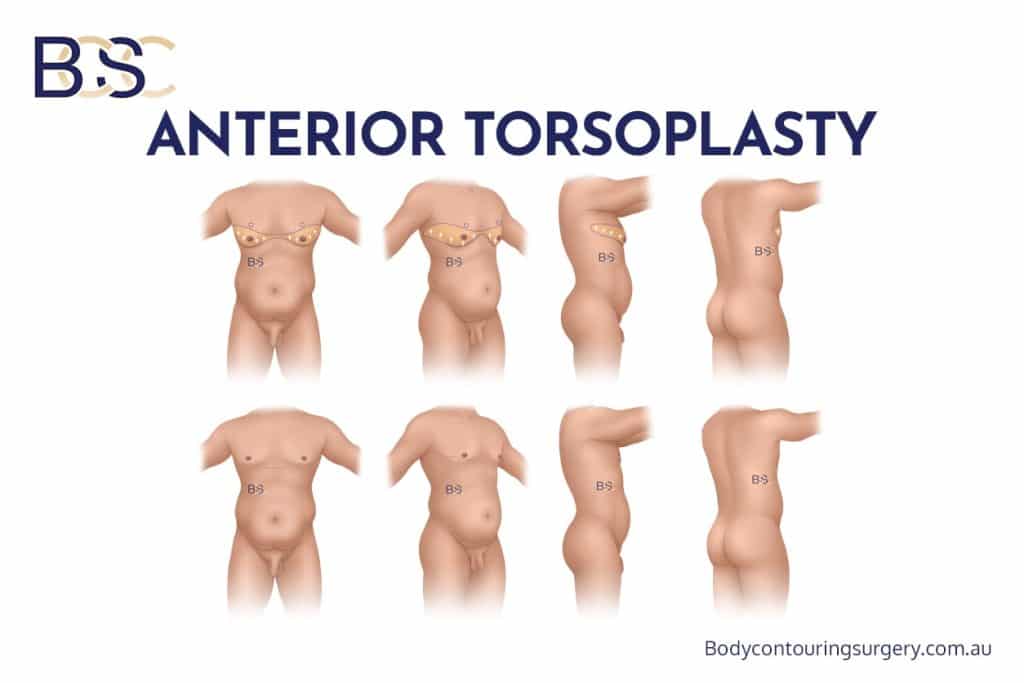
In clinical practice, recovery following upper body lift surgery generally aligns with three broad surgical patterns, each with a distinct recovery profile:
- Anterior torsoplasty (upper body lift/chest lipectomy)
- Circumferential upper body lift (360° torsoplasty)
- Upper body lift (torsoplasty) combined with VASER liposuction (suction‑assisted lipectomy)
While the foundational principles of recovery are shared, the intensity, duration, and physical demands differ.
Core Recovery Principles After Upper Body Lift (Torsoplasty) Surgery
Upper body lift (Torsoplasty) is a major surgical procedure. Whether performed alone or as part of multiple procedures, the recovery period requires realistic expectations and careful planning.
Regardless of the surgical approach, all patients should expect the following recovery features:
- Swelling and tightness are expected, particularly across the chest and upper torso
- Fatigue is common, especially in the first two weeks
- Compression garments are essential and non‑negotiable
- Recovery progresses in stages, not days
- Close follow‑up is critical
Post‑weight‑loss patients often have reduced skin elasticity, altered lymphatic drainage, and large surface areas treated. These factors can prolong swelling and increase the need for structured aftercare.
Dressing care and management of the nipple–areola complex (NAC) are central components of recovery and require careful attention.
Dressing Care After Upper Body Lift (Torsoplasty)
Proper wound healing after torsoplasty procedures depends heavily on meticulous dressing care, protection of surgical wounds, and adherence to follow-up appointments.
Dressing protocols are individualised but follow consistent principles based on the extent of the surgical procedure.
Anterior Torsoplasty Dressings
For anterior upper body lift procedures:
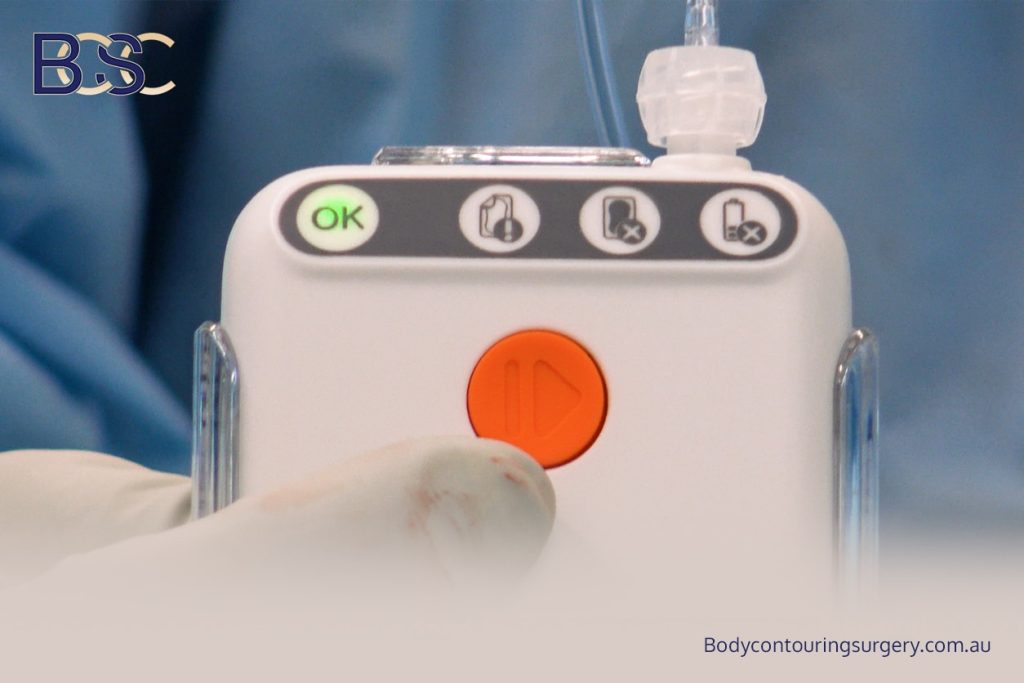
- PICO negative pressure dressings are routinely applied to the anterior chest
- These dressings help manage fluid, support wound healing, and reduce complication risk
- PICO dressings are typically left in place for approximately 7 days
- If the seal fails or the device malfunctions, earlier review and replacement may be required
Circumferential Upper Body Lift Dressings
For circumferential torsoplasty procedures:
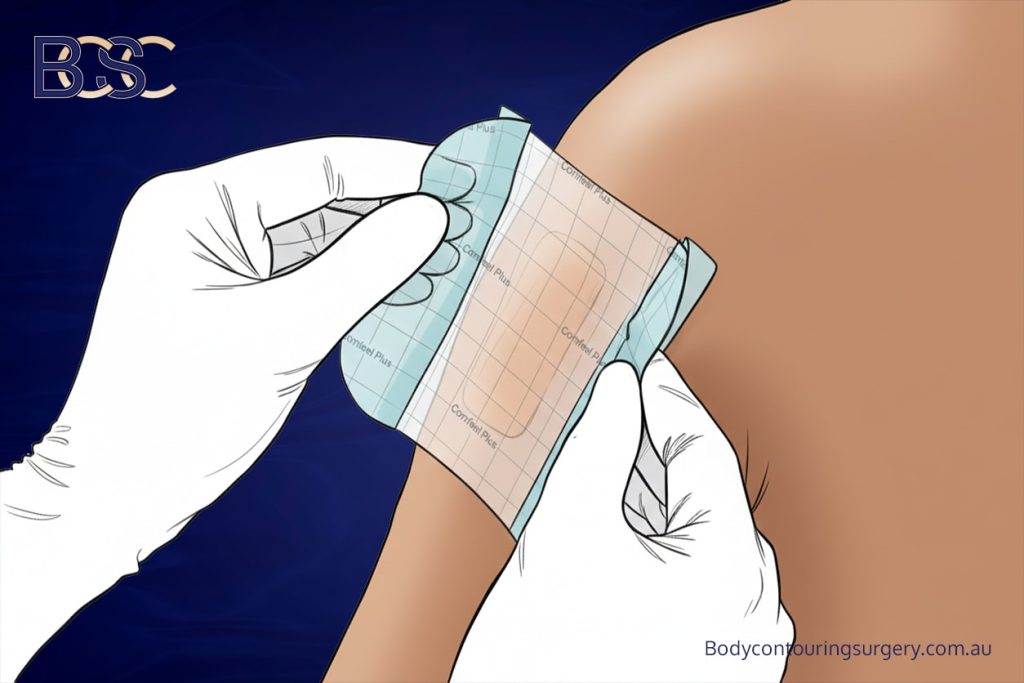
- Comfeel dressings are commonly applied to side and back incisions
- These areas experience higher movement and tension
- Dressings are assessed and changed during scheduled follow‑up visits at our Lorn clinic
Patients should not remove or adjust dressings unless specifically instructed to do so. Showering instructions are individualised and explained clearly prior to discharge.
Nipple–Areola Complex (NAC) Graft Recovery
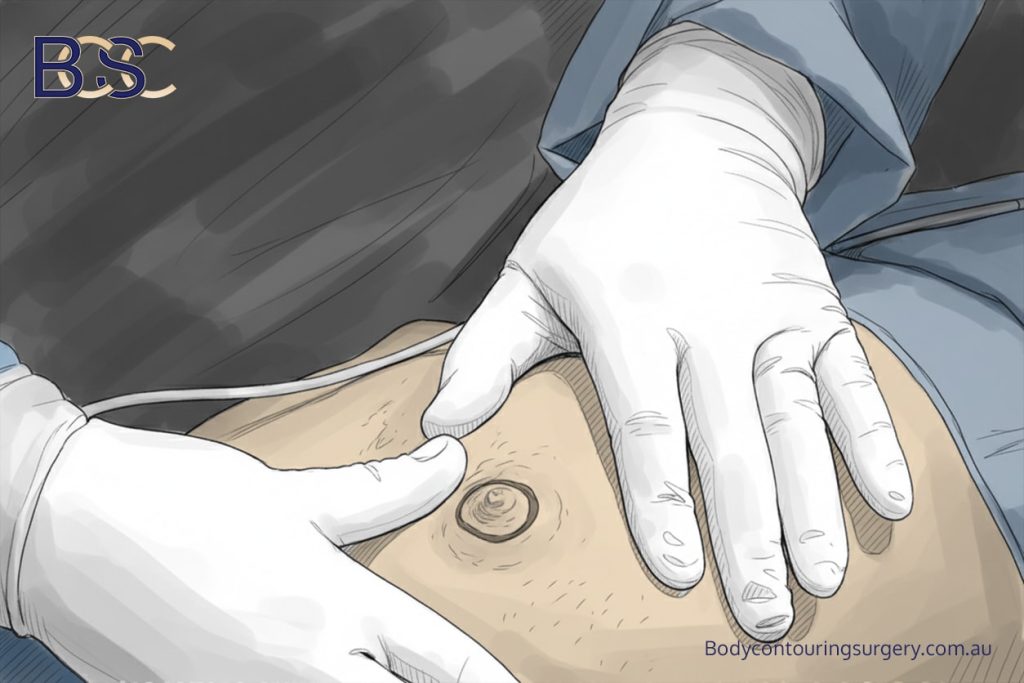
In male upper body lift surgery following massive weight loss, free nipple–areola grafting may be used as part of the surgical technique when clinically appropriate, based on individual anatomy and surgical assessment. This allows accurate nipple positioning and durable chest contouring.
Key aspects of NAC recovery include:
- The graft is secured with a bolster dressing, fixed using surgical clips
- The bolster provides gentle, even pressure to support graft survival
- The dressing is intentionally left undisturbed during early healing
- Bolster dressings and clips are typically removed around day 10 during clinic review
During early healing, temporary changes in colour, sensation, and firmness are expected.
Patients are advised to:
- Avoid touching or disturbing the bolster
- Prevent pressure or stretching across the chest
- Follow compression and activity restrictions carefully
NAC healing is monitored closely during follow‑up appointments.
Hospital Stay at an accredited private hospital
Upper body lift (torsoplasty) surgery is performed under general anaesthesia and usually requires an inpatient stay, depending on the extent of surgery, overall health, and individual recovery needs. This applies whether the procedure is limited to the upper torso or combined with other body lift (lipectomy) procedures such as a lower body lift (lower lipectomy), tummy tuck (abdominoplasty), arm lift (brachioplasty), or thigh lift (thighplasty).
Upper body lift (torsoplasty) surgery is performed at an accredited private hospital, where patients are cared for in a structured post‑operative environment.
Immediately After Surgery
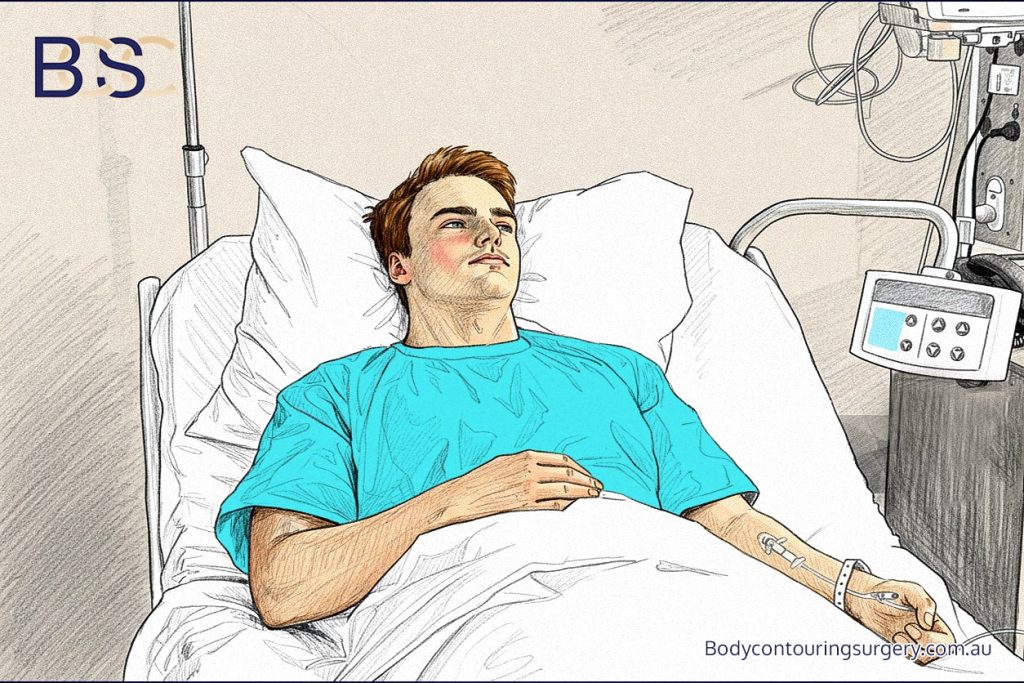
On waking, patients can expect:
- An indwelling urinary catheter (IDC), particularly after longer operations
- Surgical drains to manage fluid accumulation
- Patient‑controlled analgesia (PCA) for early pain control
- PICO dressings on the chest
- Comfeel dressings if circumferential surgery was performed
- Compression garments are already in place
Patients are reviewed in recovery by both the surgeon and anaesthetist prior to transfer to the ward.
The First Night
The first night is often the most uncomfortable. Common challenges include:
- Difficulty sleeping
- Chest tightness and discomfort
- Restricted movement due to drains and monitoring equipment
This experience is expected and temporary.
Day One After Surgery
All patients are reviewed on the morning after surgery.
Day one priorities include:
- mobilisation
- Pain and blood pressure monitoring
- Gradual increase in movement
Patients who undergo circumferential surgery or extensive liposuction may experience:
- Higher discomfort levels
- Increased swelling
- Occasional light‑headedness
Early mobilisation such as sitting out of bed, standing, and short walks is commonly encouraged to help reduce the risk of complications, such as blood clots, and to support recovery, as advised by the treating team.
Pain, Tightness, and Fatigue
Pain, swelling, and tightness are expected after lift (lipectomy) surgery and body contouring. Pain medication is prescribed to support comfort and proper healing during the early recovery process.
- Chest tightness is universal
- Circumferential surgery adds flank and upper‑back tightness
- Fatigue may persist for several weeks
- Discomfort is most noticeable in the first 1–2 weeks and gradually resolves
Pain is actively managed as part of post‑operative care, and patients are supported throughout recovery in accordance with individual needs and clinical guidance.
Drains and Compression
Drains
- Drains are routinely used
- Circumferential procedures may require additional drains
- Removal often occurs within 5–10 days, although timing varies depending on individual healing and drain output, depending on output
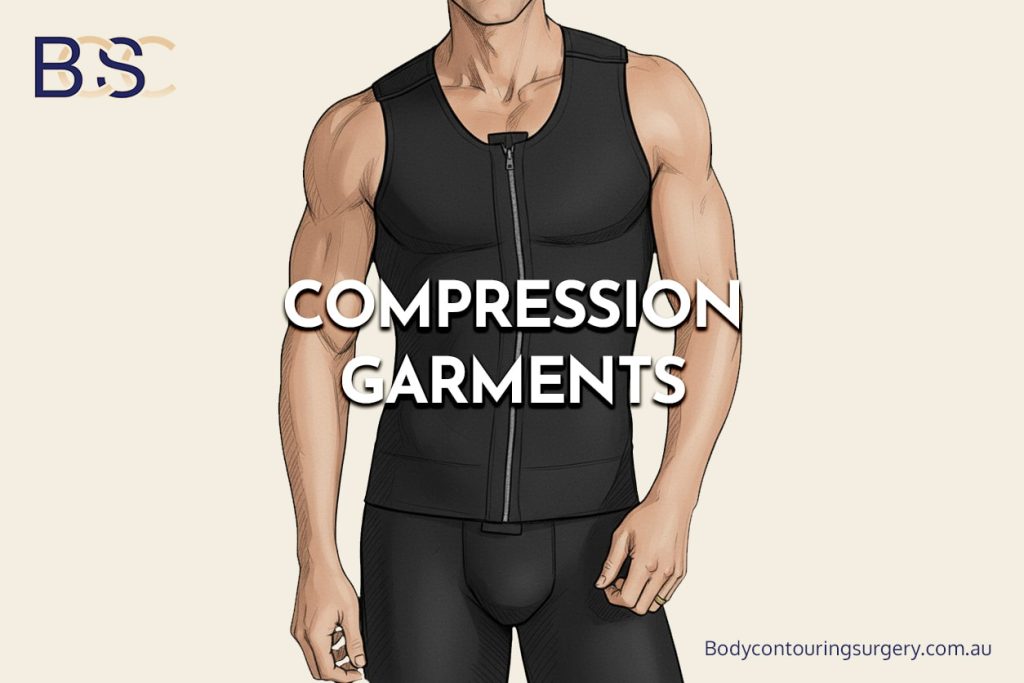
Compression Garments
- Worn continuously for 4–6 weeks
- Essential for swelling control and contour support
- Extended coverage may be required after circumferential surgery or VASER liposuction (suction-assisted lipectomy)
Activity Guidelines
Light walking is encouraged early to reduce swelling and lower the risk of blood clots. However, strenuous physical activity, heavy lifting, and weight lifting must be avoided during the early recovery period.
- Gentle walking begins from day one
- No heavy lifting or upper‑body strain for at least 6 weeks
- Twisting and reaching require caution after circumferential surgery
- Return to desk‑based work may be possible around weeks 3–4 for some patients, depending on individual recovery progress and medical advice
When VASER Liposuction (suction-assisted lipectomy) Is Included
Book Your Consultation at Body Contouring Surgery Clinic in Newcastle Today
Book Online NowWhen VASER liposuction (suction-assisted lipectomy) is combined with torsoplasty:
- Swelling and bruising are more pronounced
- Treated areas may feel firm initially
- Compression becomes even more important
- Final contour refinement may continue over several months as swelling resolves and tissues heal.
Typical Recovery Timeline
Understanding the recovery time for an upper body lift (torsoplasty) helps patients maintain realistic expectations. Healing timelines vary, and adherence to medical advice is important to reduce the risk of complications, including poor wound healing.
Weeks 0–2: Intensive Recovery Phase
- Significant swelling and fatigue
- Dressings, drains, compression, and limited mobility
- NAC bolster protection phase
- Focus on rest, wound care, and gentle movement
Weeks 3–6: Functional Recovery
- Gradual improvement in comfort and independence
- Reduced swelling
- Return to light daily activities and desk work
Weeks 6–12: Progressive Normalisation
- Increased activity under guidance
- Compression may be reduced or discontinued
- Light exercise may resume
Beyond 3 Months
- Continued scar maturation
- Gradual resolution of residual swelling
- Ongoing contour refinement
Follow‑Up Care Through BCSC Clinics

Recovery continues well beyond hospital discharge.
The first two weeks involve intensive follow‑up, often 2 to 3 visits per week, focusing on:
- Wound and graft assessment
- Drain and dressing management
- Swelling and blood pressure monitoring
- Compression adjustment
Around days 7–10:
- PICO dressings are removed
- NAC bolsters and clips are removed
- Drains are often removed if appropriate
Follow‑up then continues at increasing intervals over subsequent months.
Patients are encouraged to contact the clinic early if concerns arise; early review is always preferred.
Long‑Term Recovery and Expectations

Long‑term recovery after body lift (torsoplasty) surgery depends on maintaining a stable weight, a healthy lifestyle, and protecting the results of skin removal and the excess skin removed during surgery.
Final results develop over time. Swelling settles gradually, scars mature over many months, and the body adapts to its new contour.
Maintaining a stable weight and a healthy lifestyle may help support longer‑term surgical outcomes. Results vary between individuals.
Frequently Asked Questions About Upper Body Lift Recovery
What is the recovery time for a torsoplasty?
Most patients require several weeks for initial recovery. The first few weeks focus on wound healing, managing excess skin removal sites, and reducing swelling. Full recovery and return to a normal routine may take several months.
What is the surgery after massive weight loss?
Surgical procedures for patients with significant excess skin after weight loss include body lift (lipectomy), upper body lift (Torsoplasty), lower body lift (belt lipectomy), arm lift (brachioplasty), thigh lift (thighplasty), breast lift (mastopexy), and tummy tuck (abdominoplasty). These procedures aim to remove excess tissue and loose skin.
What is the hardest plastic surgery to recover from?
Procedures involving a significant amount of skin removal, such as a circumferential body lift (lipectomy) or a combined upper body lift (torsoplasty) and lower body lift (belt lipectomy), are often considered among the most demanding due to longer recovery times and greater physical demands.
What is the recovery time for an upper body lift (torsoplasty)?
The recovery process typically spans several weeks. Most patients resume light activities within a few weeks, while full healing, scar maturation, and soft tissue settling can take several months.
Final Thoughts from BCSC
Recovery after male upper body lift (torsoplasty) surgery is a structured, supported process. While demanding, it is temporary and, when approached properly, lays the foundation for durable, masculine contouring after major weight loss.
At Body Contouring Surgery Clinic, our role extends beyond surgery itself. From an accredited private hospital to ongoing care at our BCSC clinics, recovery is guided, monitored, and supported at every stage.