Recovering from upper and lower abdominal lipectomy post weight loss is a staged and evolving process rather than a single recovery event. This surgical procedure is most often considered by individuals who have experienced significant weight loss and are left with excess skin and fat involving both the lower abdomen and the upper abdominal or lower chest area. Although less commonly performed than a standard abdominoplasty, this approach may be appropriate in selected post weight loss patients where skin laxity is primarily distributed above and below the umbilicus rather than through the central abdomen.
Book Your Consultation at Body Contouring Surgery Clinic in Newcastle Today
Book Online NowAcross the Body Contouring Surgery Clinic (BCSC) network, recovery is regarded as a core component of body contouring surgery. Upper and lower abdominal lipectomy is a major surgical procedure, and the recovery period requires preparation, patience, and adherence to postoperative guidance. While aspects of recovery overlap with those of a tummy tuck (abdominoplasty), there are important distinctions related to incision placement, reduced tissue undermining, and the broader context of post weight loss body contouring.
What an Upper and Lower Abdominal Lipectomy Involves
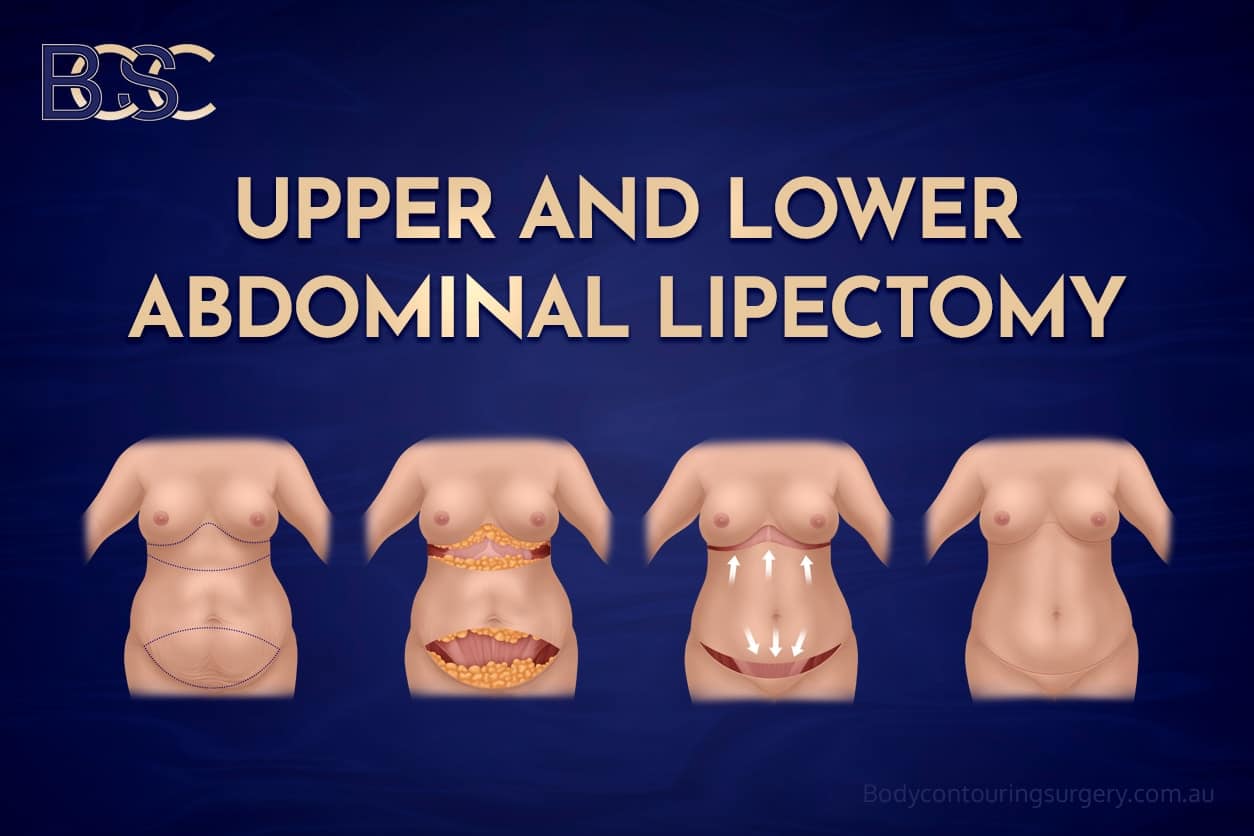
Upper and lower abdominal lipectomy is a surgical procedure designed to remove excess skin from two separate zones of the abdominal region. The lower excision is similar in location to that used for a standard tummy tuck (abdominoplasty). The upper excision is placed along the lower chest or beneath the breast crease, depending on anatomy and the pattern of remaining skin.
In contrast to a full abdominoplasty, the umbilicus is usually left in its original position, and dissection beneath the skin is more limited. By reducing the amount of undermining, the procedure aims to minimise dead space, which may reduce the likelihood of fluid collections such as seroma or haematoma in appropriately selected patients. Despite these differences, upper and lower abdominal lipectomy remains a substantial body contouring surgery and requires a structured recovery process.
Patients considering this operation often have a history of bariatric surgery or have achieved weight loss through medical management or lifestyle changes. Many report massive weight loss, leaving loose skin, excess skin folds, and areas of excess skin and fat that do not resolve even after weight stabilisation.
Early Hospital Recovery and Discharge Planning

Upper and lower abdominal lipectomy is performed under general anaesthesia. The length of hospital stay varies and is influenced by the extent of surgery, individual health factors, and the early stages of recovery.
During the immediate postoperative period, monitoring focuses on pain control, early mobilisation, fluid balance, and detection of early complications. Surgical drains are commonly used to manage fluid accumulation and support wound healing. A compression garment is typically fitted prior to discharge to support the abdominal wall and assist with swelling management.
Pain control is tailored to the individual and usually involves prescribed pain medication, with progression to oral medication as mobility increases. In selected patients, a blood thinner may be prescribed to reduce the risk of blood clots, including deep vein thrombosis, particularly in those with risk factors related to major weight loss or reduced mobility.
The First Two Weeks: Foundation of Recovery
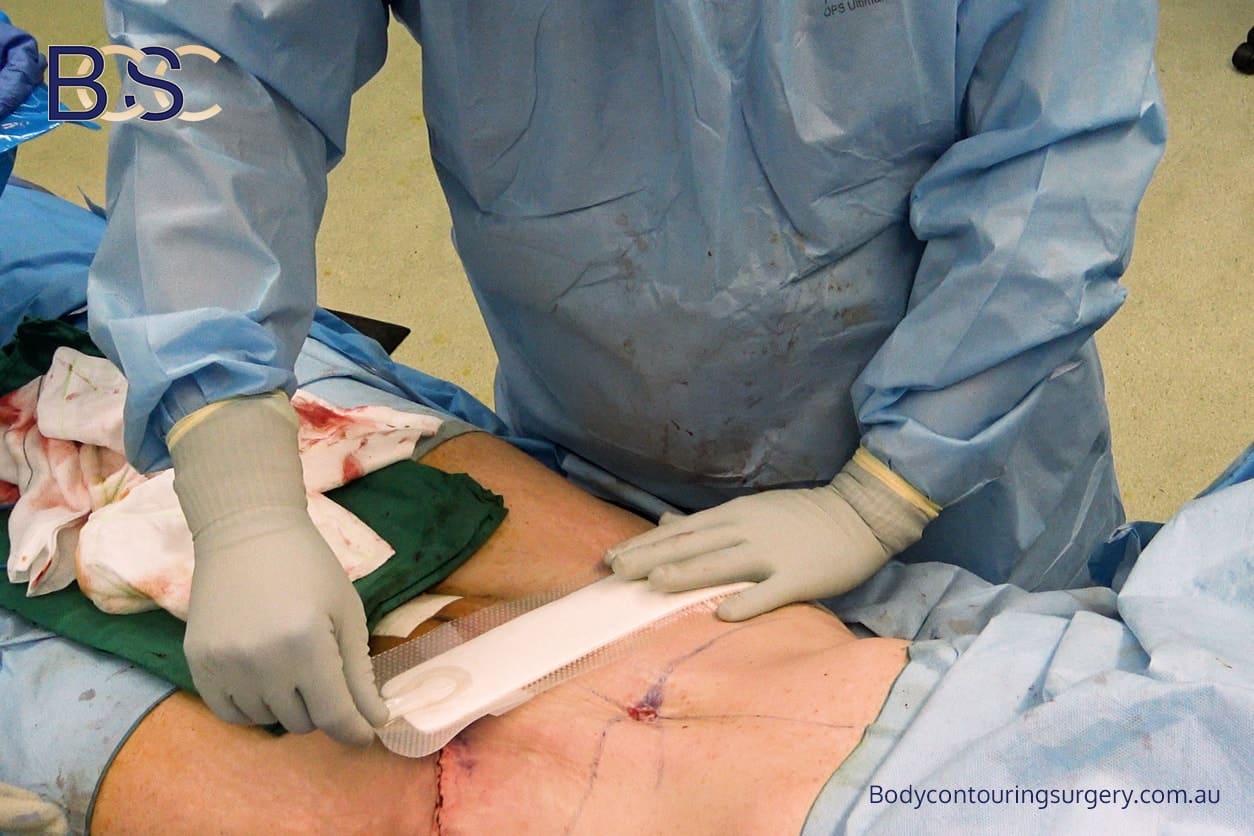
The first two weeks following surgery are focused on establishing movement patterns, supporting wound healing, and attending early postoperative reviews. Patients are encouraged to walk short distances soon after surgery to promote circulation and reduce the risk of blood clots, while avoiding heavy lifting and strenuous activity.
Postoperative appointments during this phase allow for review of dressings, removal of drains when appropriate, and close monitoring of wound healing. Supportive measures may be used to assist the healing process, depending on individual needs and clinical judgement.
Swelling, bruising, and a feeling of tightness across the abdominal region are common during this period. Consistent use of the compression garment, often worn day and night, plays an important role in managing swelling and supporting the healing tissues.
Wound Healing and Long-Term Scar Management
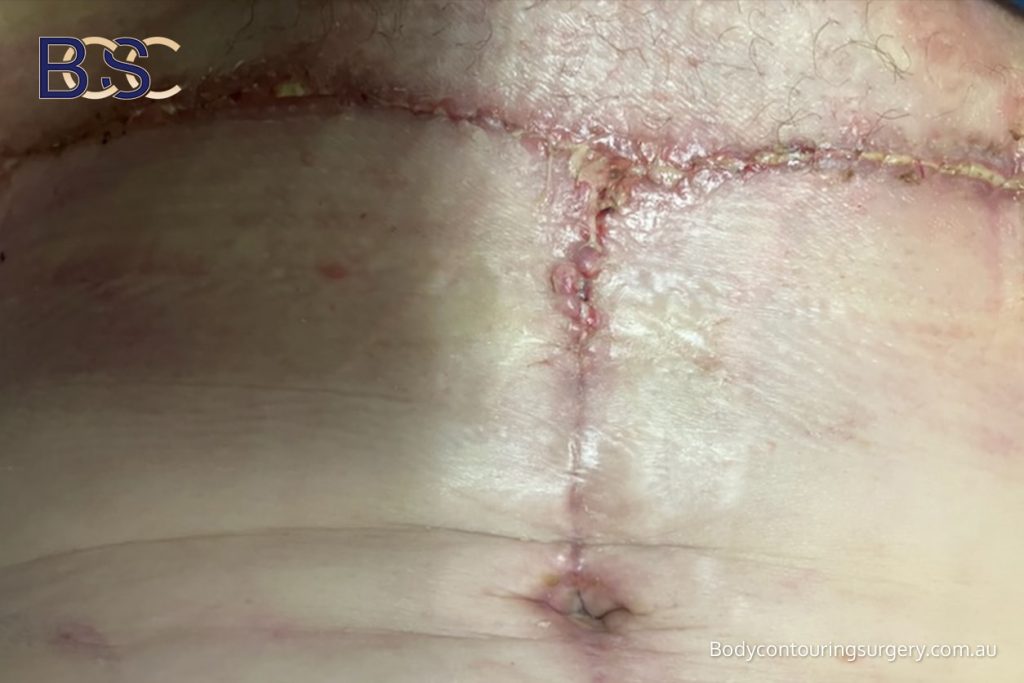
Wound healing following upper and lower abdominal lipectomy occurs progressively over several months. In the early stages, incisions are protected with dressings and surgical tape to reduce tension and support skin closure. As healing advances, patients transition to longer-term scar care strategies as advised by their surgical team.
Because two separate incision lines are involved, careful attention is given to skin tension and blood supply. Patients are advised to avoid excessive upper body stretching during early recovery, as this can place strain on the upper incision and affect wound healing.
Smoking cessation before and after surgery is essential, as nicotine significantly increases the risk of delayed wound healing and wound complications. Adequate nutrition, including sufficient protein intake, supports tissue repair and the overall healing process.
Gradual Return to Activity and Daily Tasks
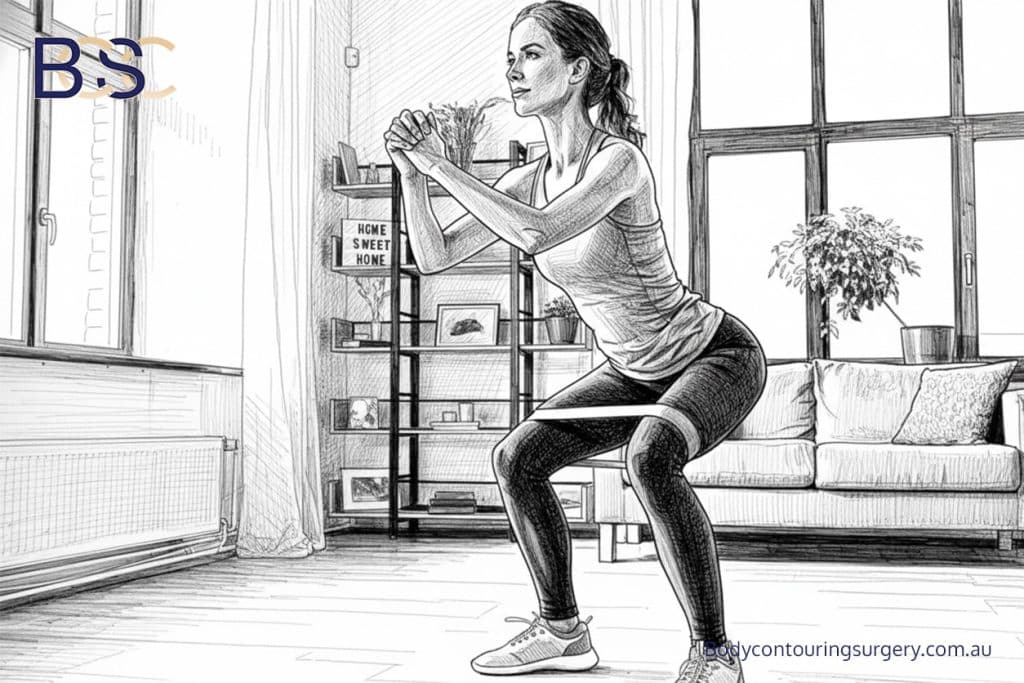
Gentle movement is encouraged early, but physical activity is reintroduced in stages. For approximately six weeks, patients are advised to avoid heavy lifting, high-impact exercise, and activities that place strain on the abdominal wall or underlying muscles.
Driving is generally postponed until patients are no longer taking strong pain medication and can move comfortably. Many patients return to desk-based or sedentary work within several weeks, while roles involving physical labour often require a longer recovery period.
Balancing activity with rest is an important part of recovery. Overexertion can increase swelling, slow wound healing, and raise the risk of complications.
Compression Garments and Ongoing Swelling
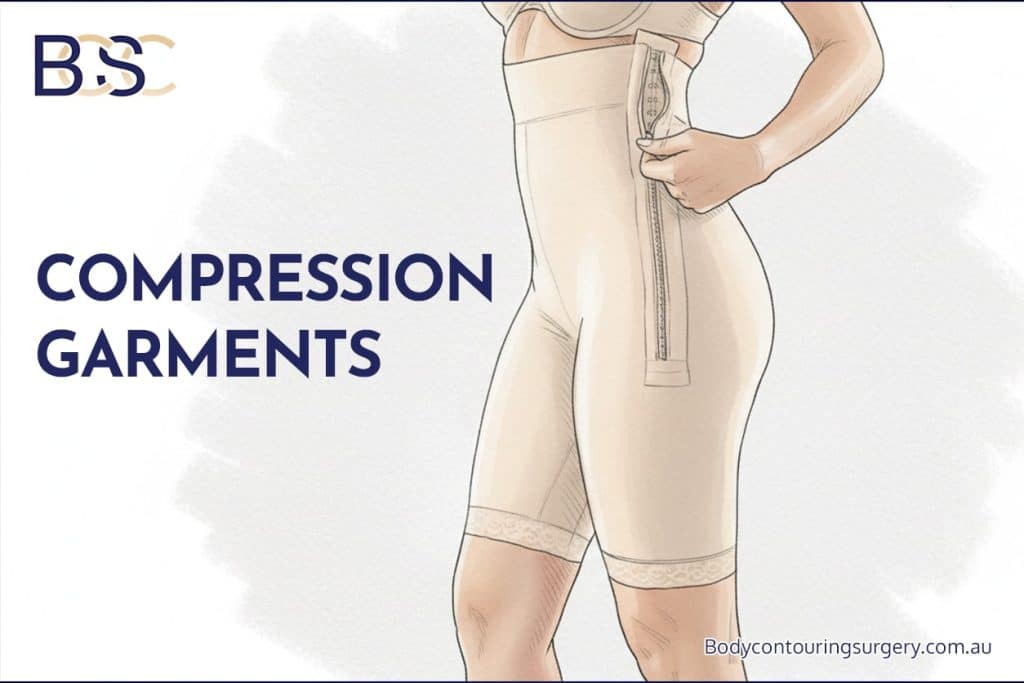
Compression garments are a key component of recovery after body contouring procedures. Following upper and lower abdominal lipectomy, garments are usually worn continuously for four weeks, followed by another 2 weeks half-time.
Compression assists with swelling control, supports the abdominal wall, and may help comfort during movement. Swelling resolves gradually over several months, and changes in body shape continue as tissues settle.
Nutrition, Weight Maintenance, and Lifestyle Considerations

Supporting recovery requires attention to overall health. Patients are encouraged to follow a balanced diet, maintain hydration, and avoid alcohol during the early recovery period.
Weight stability remains particularly important following post-weight-loss surgery. Significant fluctuations in weight can affect remaining skin and influence surgical outcomes. While minor changes in weight may occur, ongoing major weight loss during the recovery period is generally discouraged.
Recognising and Responding to Complications
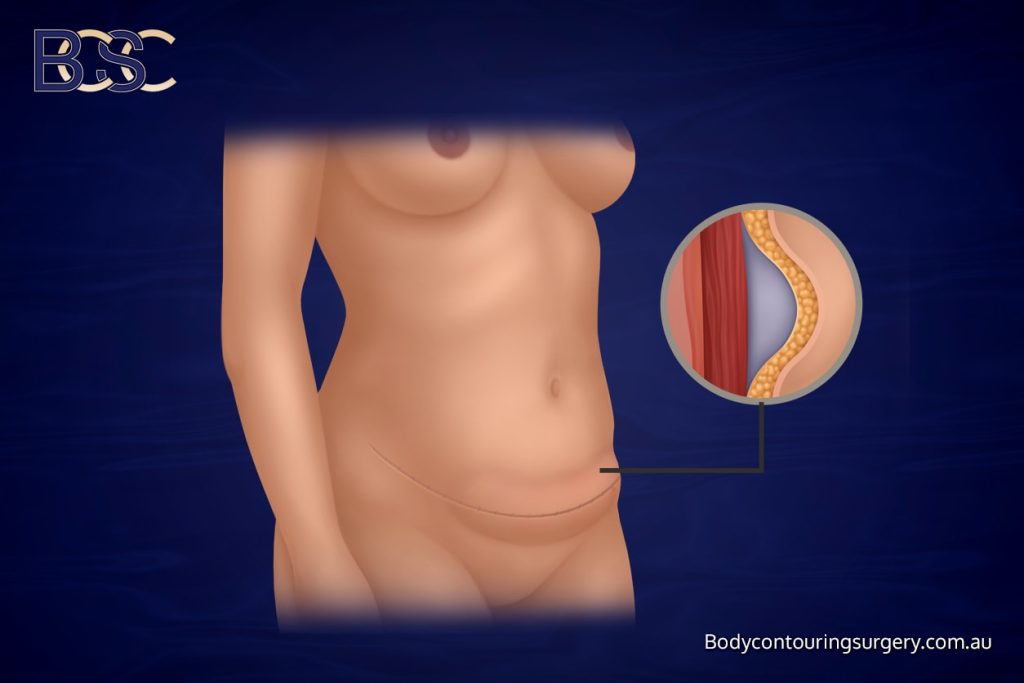
All surgical procedures carry risks. Following upper and lower abdominal lipectomy, potential complications include infection, delayed wound healing, seroma, haematoma, and blood clots.
Patients are educated about warning signs such as increasing pain, redness, fever, unexpected wound drainage, or sudden swelling. Prompt communication with the surgical team allows early assessment and management of concerns if they arise.
Recovery Beyond Six Weeks and Future Planning
Recovery from lipectomy surgery continues well beyond the initial six-week period. Scar maturation may take up to 12 months, and gradual changes in body shape occur as swelling resolves and tissues adapt.
Many post weight loss patients consider additional body contouring procedures after full recovery. These may include a lower body lift (belt lipectomy), thigh lift (thighplasty), arm lift (brachioplasty), breast lift (mastopexy), or an upper body lift. Planning is individualised, staged, and focused on recovery capacity.
For some individuals, upper and lower abdominal lipectomy represents only the beginning of a broader, comprehensive body contouring journey following substantial weight loss.
Follow-Up and Continuity of Care

Within the BCSC model of care, postoperative follow-up is considered essential. Regular reviews are scheduled during early recovery, followed by longer-term assessments at one, three, six, and twelve months after surgery.
For patients who travel for surgery, early postoperative arrangements are discussed in advance. Ongoing care may be coordinated with the patient’s general practitioner, with telehealth support where appropriate, to maintain continuity throughout the recovery period.
Key Points to Consider
Recovering from upper and lower abdominal lipectomy after significant weight loss requires time, realistic expectations, and commitment to postoperative care. While the procedure can remove excess skin and treat functional concerns in selected patients, healing is gradual and outcomes vary between individuals.
A detailed consultation is required to determine whether this surgical procedure is appropriate and how it fits within an individual’s weight loss journey, medical history, and long-term health goals.