background

Post Weight Loss Surgery Combining Upper and Lower Abdominal Lipectomy, an Uncommon but Considered Option in Selected Post-weight-loss Patients

Post Weight Loss Surgery Combining Upper and Lower Abdominal Lipectomy

At Body Contouring Surgery Clinic (BCSC), many patients present after major or massive weight loss with ongoing concerns related to excess skin and fat of the abdomen. While weight loss — whether achieved through lifestyle changes or weight loss surgery — can significantly treat metabolic health and mobility, it does not reliably reverse the structural changes that occur to skin and underlying tissues over time. Once skin has been stretched for prolonged periods, particularly across the abdominal region, it may lose its ability to retract, even when a patient has reached a stable or goal weight.

For the majority of post-weight-loss patients, excess skin is distributed centrally across the abdomen and often extends to the flanks and lower back. In these situations, procedures such as an abdominoplasty (tummy tuck), extended abdominoplasty, or belt lipectomy are more commonly considered as part of body contouring surgery. However, a smaller and less typical group of patients demonstrate a different anatomical pattern, where excess skin and fat are concentrated predominantly in the lower abdomen and in the upper abdomen or lower chest, with relatively preserved skin quality through the mid-abdominal region.

In carefully selected cases, an upper and lower abdominal lipectomy performed during a single operation may be considered as an alternative to more extensive surgery.

How the abdomen changes after significant weight loss

How the abdomen changes after significant weight loss

Following significant or substantial weight loss, the abdominal skin often reflects the history of long-term stretching. Factors such as the duration of obesity, total amount of weight loss, age, genetic skin characteristics, smoking history, and previous surgery all influence how the skin behaves once weight loss has stabilised.

Many patients notice overhanging skin of the lower abdomen, excess skin folds beneath the lower chest, or redundant skin that gathers when sitting or bending. These skin folds can lead to physical discomfort, recurrent skin irritation, hygiene difficulties, and challenges with clothing fit. In some cases, the presence of excess skin and fat can interfere with daily activities or exercise, even when weight has been maintained for some time.

While most patients develop a continuous apron of excess skin across the central abdomen, a smaller group retain reasonable tension and position through the mid-abdominal area, including the umbilicus. Instead, their excess tissue is more clearly divided into upper and lower zones. It is this less common distribution that may prompt discussion about a combined upper and lower abdominal lipectomy.

Understanding abdominal lipectomy

Understanding abdominal lipectomy

An abdominal lipectomy is a surgical procedure focused on the removal of excess skin and fat from the abdominal region. Unlike an abdominoplasty, which often includes tightening of the abdominal muscles and repositioning of the umbilicus, a lipectomy is primarily concerned with excising redundant skin and fat to reduce bulk, overhang, and functional problems related to excess tissue.

Lipectomy surgery is commonly used in patients who have experienced massive or major weight loss, particularly when abdominal muscle separation (diastasis recti) is minimal and the primary concern relates to excess skin and fat. The procedure generally involves more limited undermining of underlying tissues compared with an abdominoplasty and does not aim to comprehensively change the abdominal wall.

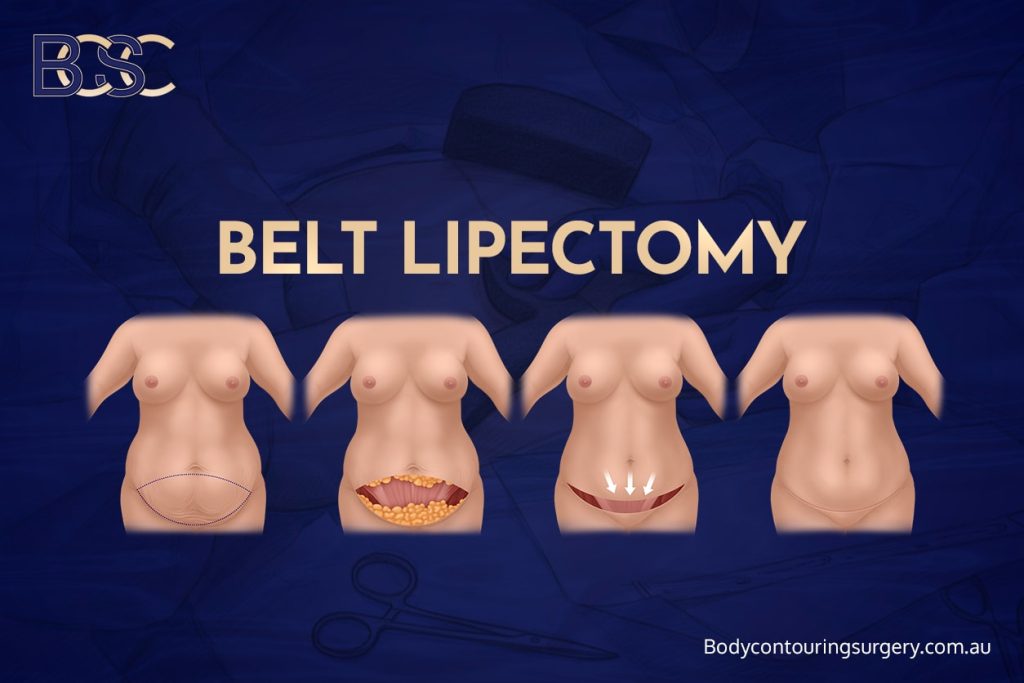
Within the broader category of abdominal lipectomy, there are several variations, including lower abdominal lipectomy, upper abdominal lipectomy, belt lipectomy, and circumferential lipectomy. Each treats a different pattern of excess skin and fat.

Performing upper and lower abdominal lipectomy together

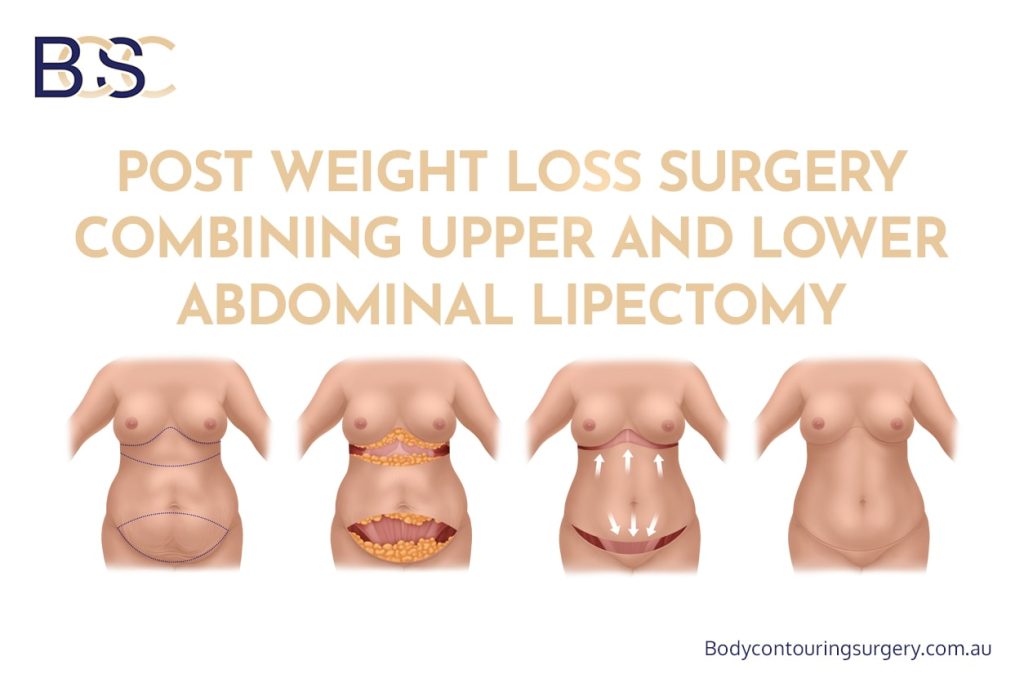
A combined upper and lower abdominal lipectomy involves treating two separate areas of excess tissue during one surgical procedure. The lower abdominal component focuses on excess skin and fat that hangs or folds below the umbilicus, while the upper component treats redundant tissue in the upper abdomen or lower chest region.

Separate incisions are planned for each area, typically following your skin creases where possible. This allows targeted removal of excess skin and fat without elevating or redraping the entire abdominal skin envelope.

This approach is uncommon because most post-weight-loss patients have central abdominal skin laxity that is better treated with an abdominoplasty or belt lipectomy. However, in selected patients where the central abdominal skin remains relatively stable and the umbilicus is well positioned, removing only the upper and lower excess tissue may be sufficient to treat the main physical concerns.

Importantly, the umbilicus and its stalk are preserved in their native position. While some degree of undermining is still required around the excision sites, this is typically more limited than in a standard abdominoplasty, as the procedure relies on direct removal of excess tissue rather than wide skin elevation.

How this differs from abdominoplasty (tummy tuck)

Standard Abdominoplasty

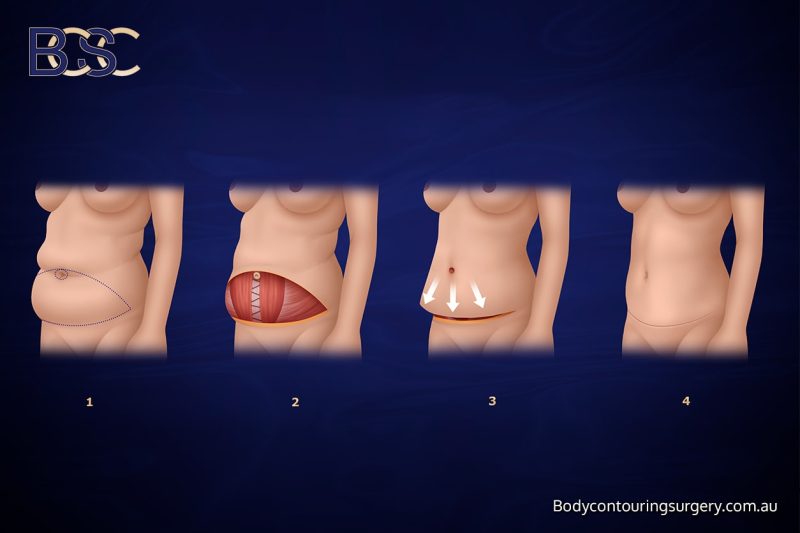
An abdominoplasty, commonly referred to as a tummy tuck, is designed to treat excess skin, excess fat, and abdominal muscle separation (diastasis recti). The procedure usually involves elevation of the abdominal skin, repair of the abdominal muscles (diastasis recti), repositioning of the umbilicus, and redraping of the remaining skin to achieve a smoother contour across the abdominal region.

By contrast, a combined upper and lower abdominal lipectomy does not aim to tighten the abdominal wall or change the entire abdomen. The abdominal muscles are generally not treated, and the central abdominal skin is left in place. The focus is on reducing excess tissue in specific areas that cause physical discomfort or functional problems after weight loss.

For this reason, an upper and lower abdominal lipectomy should not be viewed as an alternative to abdominoplasty, but rather as a different surgical procedure with different goals and limitations.

Why this is a rare surgical option

This combined approach is rarely performed because the anatomical pattern it treats is relatively uncommon. In most patients who have experienced major weight loss, excess skin is present centrally and circumferentially, making extended abdominoplasty, circumferential abdominoplasty, or belt lipectomy surgery more appropriate.

An upper and lower abdominal lipectomy is only considered when removing central abdominal skin would provide limited additional benefit and may increase surgical complexity or risk without clear functional gain.

Patient selection at Body Contouring Surgery Clinic

Patient selection at Body Contouring Surgery Clinic

Suitability for a combined upper and lower abdominal lipectomy is determined during a comprehensive consultation. Patients are typically those who have experienced significant weight loss, have maintained a stable weight, and are in good general health. Smoking status, medical history, previous surgery, and skin quality are all important factors in decision-making.

Patients with widespread excess skin affecting the flanks, lower back, or lower body are usually better suited to a belt lipectomy (lower body lift). Similarly, patients with significant abdominal muscle separation (Diastasis recti) may achieve better functional outcomes from an abdominoplasty.

Consultation and surgical planning

Consultation and surgical planning

A GP referral is required prior to consultation. During the initial appointment, a BCSC surgeon will review the patient’s medical history, weight loss journey, and current concerns. A physical examination is performed to assess the distribution of excess skin and fat, the abdominal wall, and the position of the umbilicus.

Standardised clinical photographs are taken as part of the assessment. Surgical options are discussed in detail, including alternatives such as abdominoplasty, extended abdominoplasty, or belt lipectomy. In many cases, a second consultation is recommended to allow time for consideration and further discussion.

Hospital stay and early recovery

Following surgery, patients are monitored in hospital with attention to pain control, mobilisation, and wound care. Compression garments are applied to help support the surgical areas and reduce swelling.

Patients are reviewed daily by the surgeon while admitted, and discharge planning is individualised based on recovery progress and support at home.

Hospital stay and early recovery

Recovery and follow-up care

Recovery following a combined upper and lower abdominal lipectomy is similar in many respects to recovery after abdominoplasty. Swelling and bruising are expected in the early postoperative period, and activity restrictions are necessary to support healing.

Follow-up care at Body Contouring Surgery Clinic is structured and proactive. Patients are reviewed frequently during the first two weeks, with ongoing follow-up at regular intervals up to 12 months after surgery. All routine follow-up care is included in the procedure fee.

Risks, limitations, and long-term considerations

Risks, limitations, and long-term considerations

All surgical procedures carry risks, including infection, bleeding, fluid collections, scarring, and delayed wound healing. While limited undermining may reduce certain risks, no procedure is risk-free, and individual healing responses vary.

Long-term outcomes depend on maintaining a stable weight and following post-operative instructions. Changes in weight after surgery can affect results, and ongoing commitment to a healthy lifestyle is important.

Summary

Post Weight Loss Surgery Combining Upper and Lower Abdominal Lipectomy

An upper and lower abdominal lipectomy performed in one operation is a specialised option reserved for a small group of post-weight-loss patients with a specific pattern of excess skin and fat. When carefully selected and appropriately planned, it may treat physical concerns while avoiding more extensive surgery.

A thorough consultation with a Specialist General Surgeon is essential to determine whether this approach is suitable for an individual patient.

Surgeons at Body Contouring Surgery Clinic

This website contains adult content. You must be 18 years or over to read. All surgery carries risks. You should seek a second opinion before proceeding. Results vary from patient to patient. See our disclaimer.
This is default text for notification bar