background

Dual-Vector Abdominoplasty. Combining Upper Abdominal Lipectomy with a Fleur de Lis Abdominoplasty.

Dual-Vector Abdominoplasty

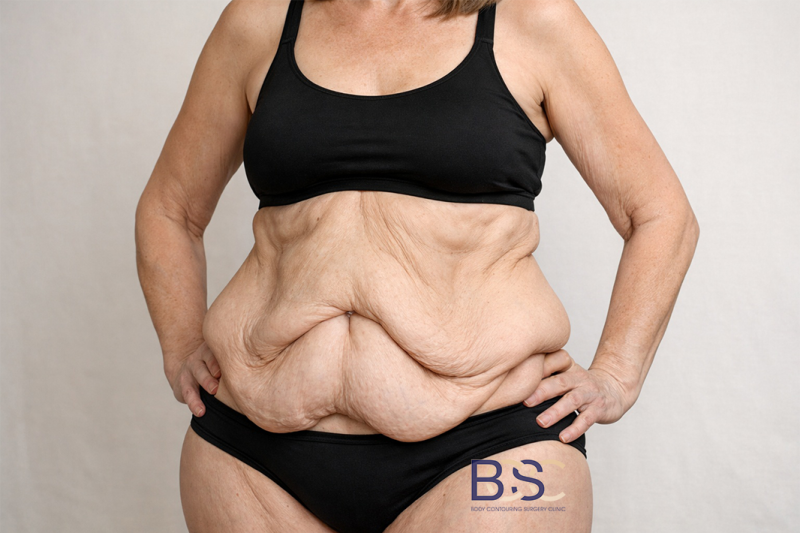
Patients who have experienced significant weight loss often develop excess abdominal skin that cannot be adequately addressed with a traditional abdominoplasty alone. In many cases, skin laxity is present in both vertical and horizontal directions and may extend beyond the lower abdomen into the upper abdomen and lower chest. These changes can persist despite stable weight and a healthy lifestyle due to permanent loss of skin elasticity following major or massive weight loss.

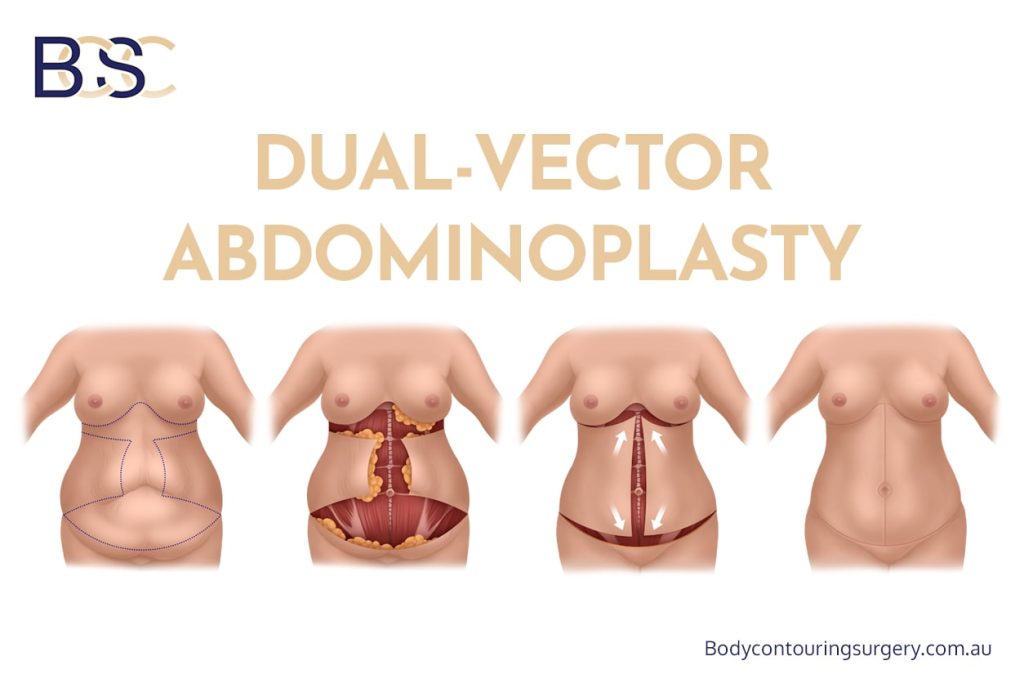
Dual Vector Abdominoplasty is a term used by our surgeons to describe a surgical approach that combines a Fleur-de-Lis abdominoplasty with an upper abdominal lipectomy. This operation is intended for post-weight-loss patients with multi-directional abdominal skin excess, including persistent loose skin in the upper abdomen. The term “dual vector” refers to the use of two distinct directions of skin excision to treat complex patterns of excess skin across the anterior abdomen.

This article explains the rationale for Dual Vector Abdominoplasty, who may be suitable for this approach, how abdominal skin changes after weight loss, the limitations of traditional abdominoplasty techniques, and important considerations regarding recovery, scarring, and risks. The information provided is general in nature and does not replace consultation with a qualified surgeon.

Who May Be Suitable for Dual Vector Abdominoplasty

Who May Be Suitable for Dual Vector Abdominoplasty

To understand who may be suitable for a Dual Vector Abdominoplasty, it is important to first consider how abdominal skin behaves during weight gain and subsequent weight loss. This operation is focused on the anterior abdomen, which is commonly affected by multi-directional skin stretching in patients who have experienced significant changes in body weight.

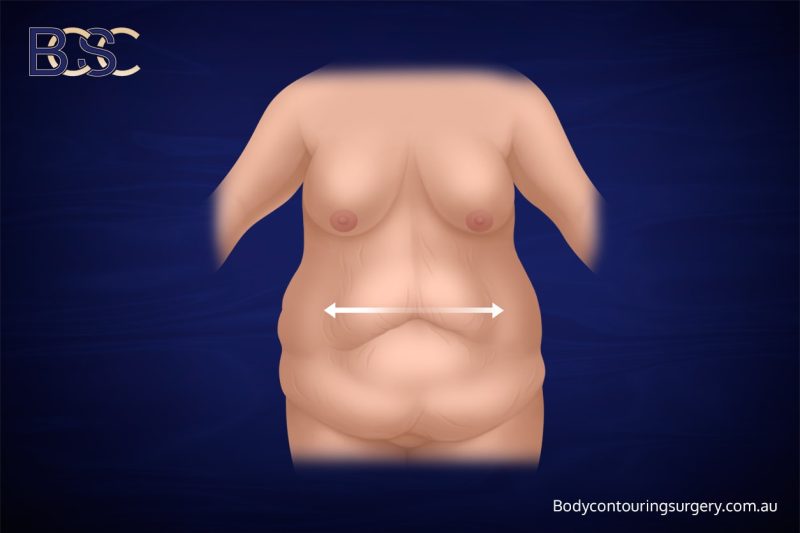
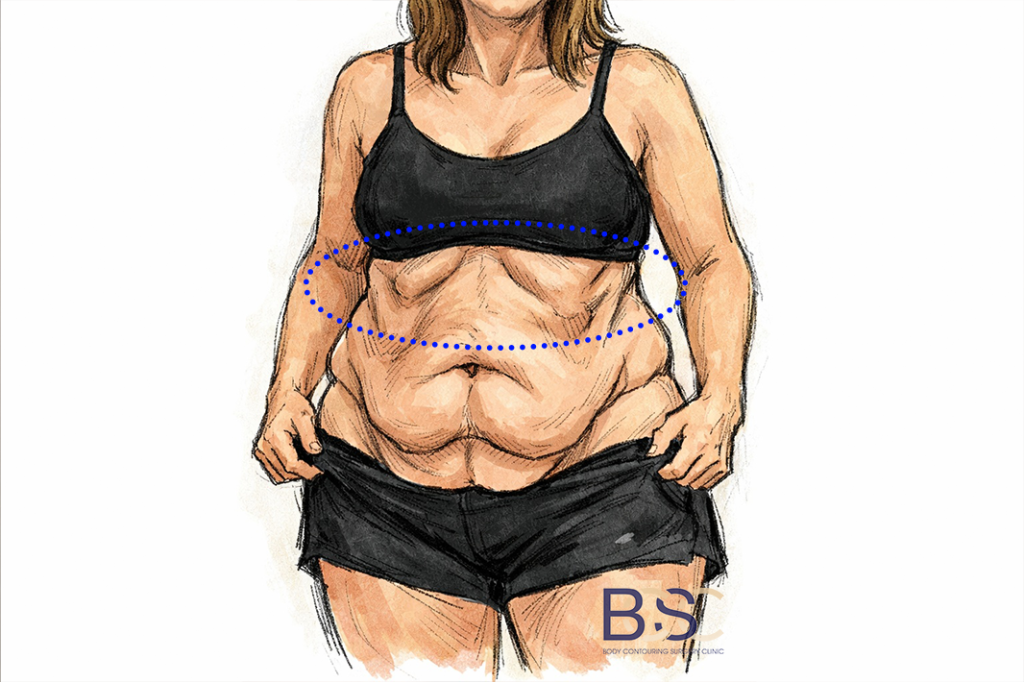
Horizontal excess skin - BCSC

When a person gains a substantial amount of weight, the skin of the abdomen stretches to accommodate increased volume. This stretching occurs in more than one direction. The skin expands vertically and horizontally, and sometimes obliquely, depending on individual body shape, fat distribution, and the duration of weight gain. Over time, these changes alter the skin’s structural components, limiting its ability to retract when weight is lost.

After substantial weight loss, the underlying fat volume is reduced, but the skin often does not fully contract. This can result in persistent excess abdominal skin that folds or hangs in multiple directions. While the lower abdomen is commonly affected, the upper abdomen and lower chest region are also frequently involved. Excess skin in this area is often under-recognised but can contribute to an imbalance between the upper and lower abdomen.

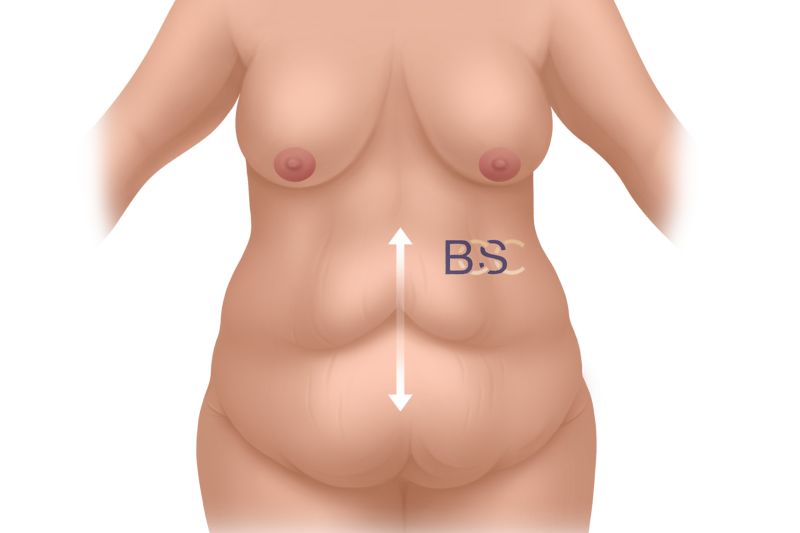
Excess vertical skin - BCSC

Dual Vector Abdominoplasty may be considered for carefully selected patients who:

  • Have excess abdominal skin affecting the anterior abdomen
  • Demonstrate skin redundancy in both vertical and horizontal directions
  • Have persistent loose skin in the upper abdomen or lower chest region
  • Have achieved and maintained a stable weight following significant or massive weight loss
  • Are medically fit for surgery
  • Have realistic expectations regarding scarring, recovery, and outcomes

Suitability is determined during a personalised consultation. Not all patients are appropriate candidates, and alternative body contouring procedures may be recommended where indicated.

Abdominal Skin Changes After Significant Weight Loss

Following significant weight loss, the abdominal region often shows permanent changes in skin quality. The skin may have been stretched for many years prior to weight loss, leading to disruption of collagen and elastin fibres. Once these changes occur, the skin’s ability to retract is limited, even when weight is stable, and muscle tone is good.

Common features seen in post-weight-loss patients include:

  • Excess abdominal skin in the lower abdomen
  • Vertical skin redundancy along the midline
  • Loose skin in the upper abdomen
  • Skin laxity extending toward the upper body and lower chest
  • Residual excess fat in specific areas

These changes can affect body contour, clothing fit, physical comfort, and hygiene. In some cases, skin folds may contribute to irritation or rashes. The pattern of skin excess varies between individuals, which is why no single abdominoplasty technique is suitable for all post-weight-loss patients.

Traditional Abdominoplasty: What It Can and Cannot treat

Traditional Abdominoplasty: What It Can and Cannot treat

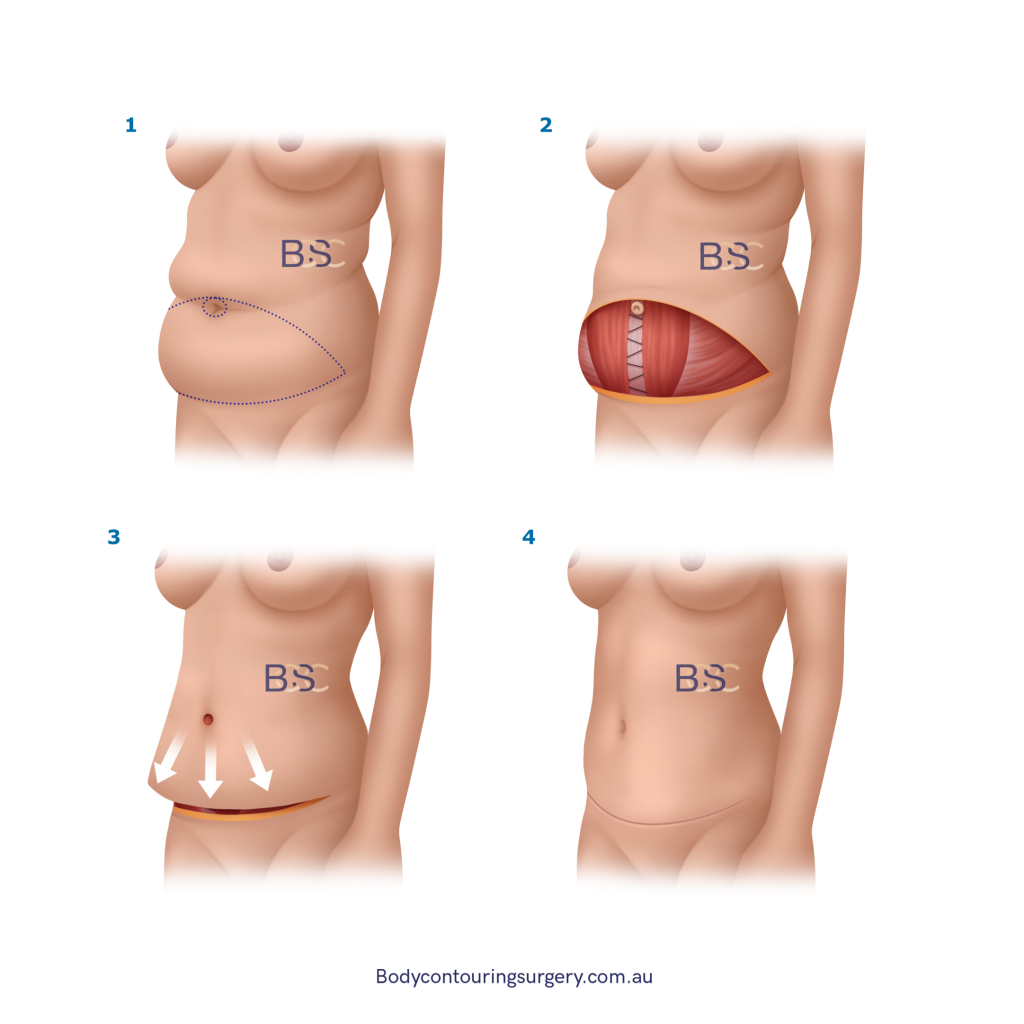
A traditional abdominoplasty involves a horizontal incision across the lower abdomen, removal of excess skin, and tightening of the abdominal muscles when indicated. This approach primarily removes skin in a vertical direction and is most effective for patients whose excess skin is concentrated in the lower abdomen.

In patients with mild to moderate skin laxity, a traditional abdominoplasty can provide a meaningful result. However, in patients who have experienced massive weight loss, this technique has limitations. It may not adequately treat:

  • Significant horizontal skin redundancy
  • Loose skin in the upper abdomen or beneath the rib cage

As a result, some post-weight-loss patients may continue to experience residual skin excess above the level of the incision, even after well-planned surgery.

The Fleur-de-Lis Abdominoplasty and Its Limitations

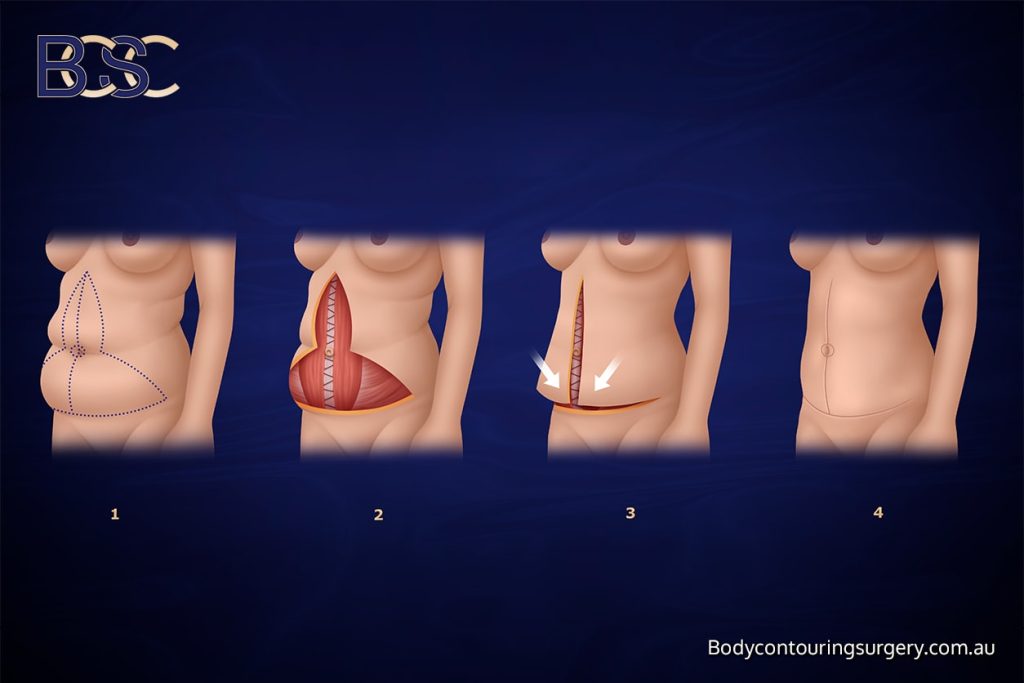
The Fleur-de-Lis abdominoplasty was developed to manage more complex patterns of abdominal skin excess. In addition to the lower horizontal incision, it includes a vertical midline incision, allowing removal of excess skin in both vertical and horizontal directions across the anterior abdomen.

For many post-weight-loss patients, the Fleur-de-Lis approach provides correction of central abdominal laxity compared with a traditional abdominoplasty alone. It is particularly useful when vertical skin redundancy cannot be corrected with a horizontal incision alone.

Despite these advantages, the Fleur-de-Lis abdominoplasty has limitations. While it treats the central abdomen, it does not directly target excess skin in the upper abdomen or lower chest region. In patients with significant upper abdominal skin laxity, this area may be left untreated, resulting in persistent laxity above the vertical incision.

The Fleur-de-Lis Abdominoplasty and Its Limitations
The Upper Abdomen and Lower Chest: An Often Overlooked Area

The Upper Abdomen and Lower Chest: An Often Overlooked Area

In post-weight-loss patients, excess skin frequently extends beyond the traditional boundaries of abdominoplasty surgery. The upper abdomen and lower chest may accumulate loose skin that descends toward the abdomen after weight loss.

This area is not effectively treated by traditional or Fleur-de-Lis abdominoplasty techniques, as these procedures rely primarily on downward or central tension. Without direct excision, loose skin in the upper abdomen may persist despite otherwise satisfactory surgical correction of the lower abdomen.

Recognising and treated this pattern of skin excess is central to the rationale behind Dual Vector Abdominoplasty.

Upper Abdominal Lipectomy: Addressing the Upper Vector

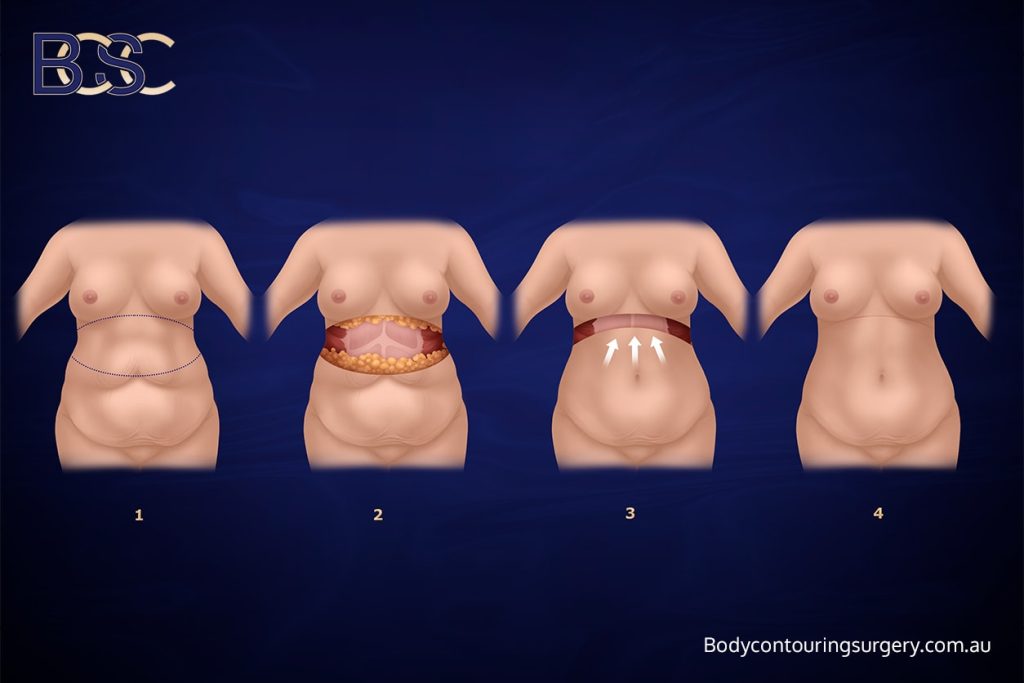
An upper abdominal lipectomy involves the removal of excess skin from the upper abdomen through a transverse incision placed beneath the breast or chest crease. This technique directly treats loose skin in the upper abdomen by excising it rather than attempting to redistribute it.

When performed alone, upper abdominal lipectomy is rarely appropriate. However, when combined with a Fleur-de-Lis abdominoplasty, it allows more comprehensive treatment of excess skin across the entire anterior abdomen.

Upper Abdominal Lipectomy: Addressing the Upper Vector

The Dual Vector Abdominoplasty Concept

Dual Vector Abdominoplasty combines a Fleur-de-Lis abdominoplasty with an upper abdominal lipectomy in a single operation. This allows skin excision along two distinct vectors:

  • A lower and central vector through the Fleur-de-Lis component
  • An upper vector through the upper abdominal lipectomy

The resulting incision pattern resembles a sideways “H”, consisting of a lower abdominal horizontal incision, a vertical midline incision, and an upper abdominal horizontal incision. This configuration allows targeted removal of excess skin that may not be adequately treated with traditional techniques alone.

Abdominal Muscle Considerations

During abdominoplasty surgery, the abdominal muscles are assessed. If muscle separation (diastasis recti) is present, repair may be performed. Not all patients require muscle repair; this determination is made on an individual basis.

Belly Button Management

The belly button is usually preserved during abdominoplasty procedures. Its position may change as excess skin is removed and abdominal contours are adjusted. Care is taken to maintain appropriate placement relative to surrounding anatomy; however, outcomes vary among individuals.

Combining Dual Vector Abdominoplasty With Other Procedures

Combining Dual Vector Abdominoplasty With Other Procedures

In selected patients, Dual Vector Abdominoplasty may be performed alongside other body contouring procedures, such as:

  • Breast lift (mastopexy)
  • Breast augmentation (Augmentation Mammoplasty)
  • Body lift (Belt lipectomy) or lower body contouring
  • Limited fat removal or combining liposuction (Suction-assisted lipectomy)

Combining procedures can allow multiple areas to be treated during a single recovery period. However, patient complications and overall surgical risk are carefully considered, and not all patients are suitable for multiple procedures.

Recovery Period and Healing Process

32f05b1f-86fb-4a88-b88c-84b98f236b25

Recovery following Dual Vector Abdominoplasty is generally longer than after a standard abdominoplasty due to the extent of surgery involved. The healing process occurs in stages and varies between individuals.

Early recovery typically involves:

  • Reduced physical activity
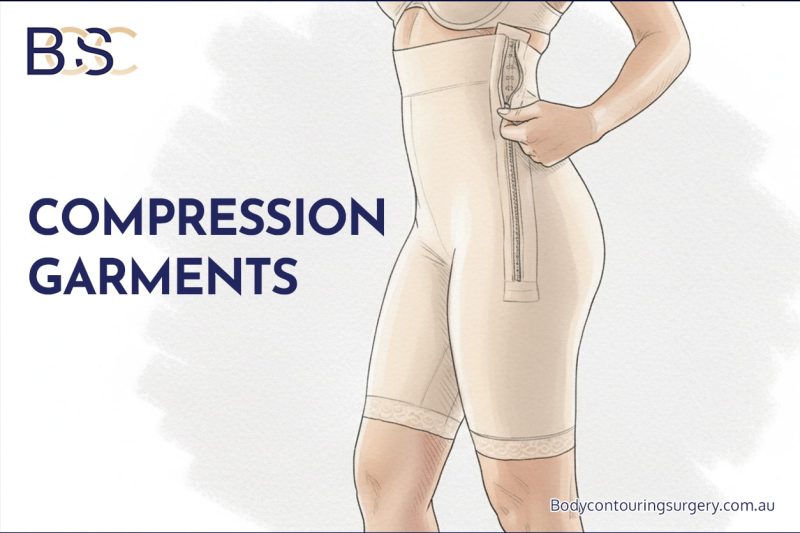
  • Wearing a compression garment
  • Regular follow-up appointments

As healing progresses, patients gradually return to normal activities. Following postoperative instructions is important for supporting wound healing and reducing the risk of complications.

Scarring and Scar Management

Scarring and Scar Management

Due to the incision pattern required, visible scars are an expected part of Dual Vector Abdominoplasty. These typically include:

  • A lower abdominal scar near the bikini line
  • A vertical midline abdominal scar
  • An upper abdominal horizontal scar

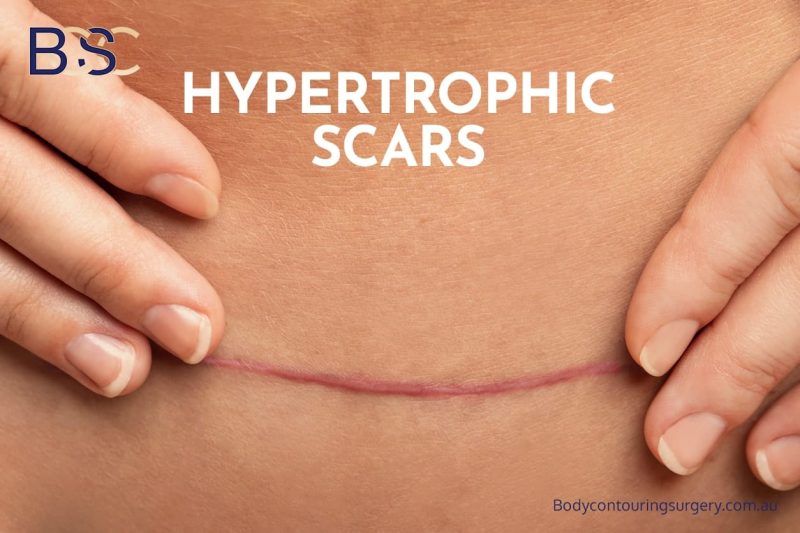
Scar management strategies are discussed as part of postoperative care. Scars are permanent but usually change in appearance over time.

Risks and Complications

Dual-Vector Abdominoplasty - Complications

As with all cosmetic surgery, Dual Vector Abdominoplasty carries risks. These may include:

  • Poor wound healing
  • Seroma formation
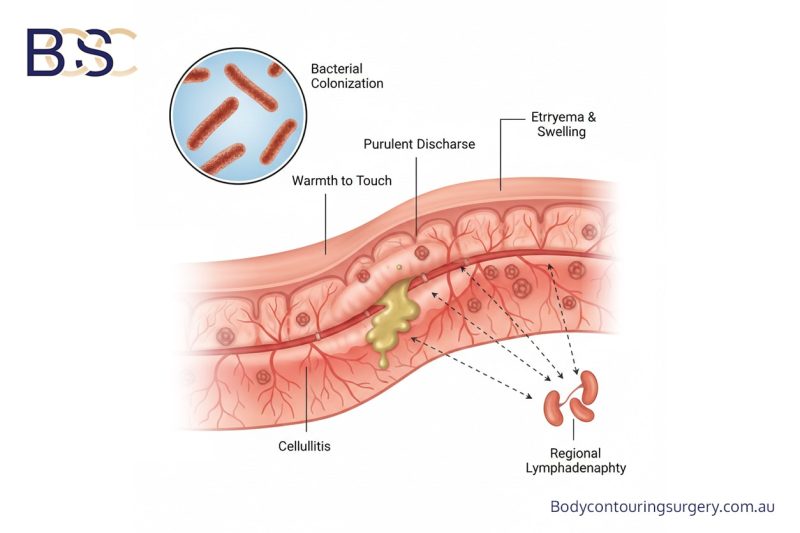
  • Infection or bleeding
  • Deep vein thrombosis
  • Pulmonary embolism
  • The need for revision surgery

All patients should understand that outcomes cannot be guaranteed and that individual healing varies.

Final Considerations

Dual-vector abdominoplasty - Final consideration

Dual Vector Abdominoplasty is a complex surgical approach designed for a specific group of post-weight-loss patients with challenging patterns of abdominal skin excess. It is not a substitute for weight loss and is not appropriate for everyone.

A thorough consultation is essential to determine suitability, discuss potential risks, and establish realistic expectations

Surgeons at Body Contouring Surgery Clinic

This website contains adult content. You must be 18 years or over to read. All surgery carries risks. You should seek a second opinion before proceeding. Results vary from patient to patient. See our disclaimer.
This is default text for notification bar